The split personality of the government in Taipei

MONDAY, 17 OCTOBER 2022

On 10 October 1911, a series of uprisings started that, over the course of the next few months, led to the fall of the Qing Dynasty and the birth of the Republic of China. After a decade of violence and political tug-of-war, the Chinese Nationalist Party led by Chiang Kai-shek ended up in control of the republican government.

The island of Formosa is about 200 kilometres from the Chinese coast. The island was ruled by Qing China between 1683 and 1895, when it was ceded to Japan. A few weeks after Japan’s surrender in 1945, officials from the Republic of China stepped of a boat in the north of Taiwan with a United Nations mandate to administer the island until a final peace treaty was signed with Japan.

In his authoritative report of the period, Formosa Betrayed, George H. Kerr narrates that the officials of the Chinese republic saw Taiwan (or the island of Formosa) as a warehouse full of luxuries that needed to be plundered as quickly as possible. Factories were dismantled and shipped to Shanghai. Furniture, ornaments, bicycles, money, jewellery, and anything else that looked like it might have value was looted and robbed either by government officials, or by soldiers brought in to terrorise the local population.

By early 1949, it was clear that the republican government, then based in Chengdu in southwestern China, was going to lose the civil war against Mao Zedong’s Communists. Between January and December 1949, most of the republican politicians and institutions, a lot of cultural treasures as well as financial resources under the control of the Republic of China were moved to the island of Formosa.

The six million inhabitants of Taiwan were not consulted about this takeover of their island by the Nationalists. For the next four decades, the population’s complaints about everything from the denial of human rights to the corrupt expropriation of property were brutally silenced.

By the early 1990s, enough of the Civil War era politicians had died out, and supporters of the idea that the government in Taipei would eventually retake power in Mainland China became fewer and fewer. In 1996, the first Taiwan-born person was chosen as president of … the “Republic of China”, because calling it what it really was – the Republic of Taiwan, was a controversy that would send the missiles flying across the Strait of Taiwan.

On 10 October 2022, several hundred thousand people in Taiwan actively celebrated the anniversary of the founding of the Republic of China (millions, of course, enjoyed the holiday without attaching any political value to it). The president of the “Republic of China”, Tsai Ing-wen, also solemnly celebrated the day with a speech. Although she referred to Taiwan as the “Republic of China”, most of the speech was about the island of Taiwan.

In a speech on 4 August 2022 in response to live-fire drills by the Chinese navy and army around Taiwan, she referred to the threat to “our nation’s sovereignty”. The question remains: What nation was she talking about? Taiwan? China? If she was talking about the island of Taiwan with surrounding smaller islands under Taipei’s administration, and the 24 million Taiwanese (and other long-term residents), then why at all celebrate the founding of the Republic of China – which for all practical purposes is a decayed relic of Chinese history? I understand that the government in Beijing threatens to go to war the moment Taipei officially declares independence, but is that reason enough to still solemnly party on October 10th every year?

It is clear that to be able to distinguish between the official independence of Taiwan and de facto independence requires a lesson in political doublespeak. But that the government in Taipei still uses the flag of the losers of the Chinese Civil War, the flag of the looters of Taiwan and the oppressors of freedom and human dignity, and still after seven decades actively celebrates the founding of a state that has long ceased to exist, is sometimes difficult to grasp.

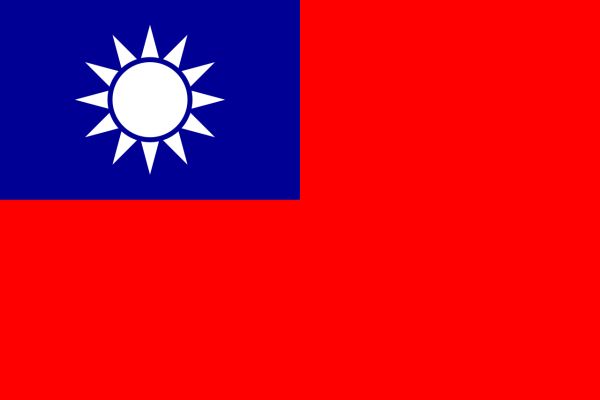
Flag of the Republic of China, 1912-1928, before it was replaced by the government of Chiang Kai-Shek with the flag below
The flag of the Republic of China, 1928-1949, after which it served as the flag of the ROC on Taiwan

* * *

The dream of independence of millions of Taiwanese (not all, but a large proportion of the adult population) is understandable. Even in the seventeenth, eighteenth and nineteenth centuries, Taiwan was only an afterthought for the Qing government in Beijing. Then for fifty years the island was part of Japan, and for the last seventy years, it has been ruled separately from Mainland China. Generations of Taiwanese have been born and have lived their entire adult lives with the daily reality that the island is governed separately from China.

On the other hand, I also understand the argument of Greater China supporters, who consider the majority of the population of Taiwan to be part of the same ethnic family as the majority of the population of Mainland China. Language and cultural roots are also shared. Thousands of families in Taiwan have relatives in China whom they visit regularly.

I also understand that the government of the People’s Republic of China has an argument for reunification. They see themselves as the inheritors of Chinese history, with the responsibility to the ancestors and descendants of the Chinese population to make whole what had been broken by the end of the Qing Era.

Whether the People’s Republic can make a legitimate argument about jurisdiction over Taiwan requires a deep dive into the murky waters of treaties signed after World War II between Japan and America, and between Japan and the Republic of China. It was, for example, not spelled out specifically who Taiwan belonged to after Japan had ceded control over the islands.

Arguments aside, what sometimes irritates is the split personality of the government in Taipei. I appreciate the thorny problem that if independence is officially declared, the government in Beijing will have little choice but to carry out its decades-long threats. The Taipei government nevertheless walks a fine line. Passports are issued these days with “Taiwan” in large Roman letters, and “Republic of China” only in Chinese characters. Statements are made about Taiwan’s independence, but under the name “Republic of China”. Says President Tsai Ying-wen in an interview with the BBC after she was elected in 2020: “We don’t have a need to declare ourselves an independent state. We are an independent country already and we call ourselves the Republic of China (Taiwan).”

Taiwan passport

If Taiwan were truly independent, would the president not refer to her country as the Republic of Taiwan? And how much does it matter that Taiwan is officially only recognised as independent by fourteen countries and doesn’t have a seat at the United Nations? Most countries do maintain diplomatic offices in Taipei, but none are official embassies, in deference to the People’s Republic of China that considers Taiwan a province of China.

The fact of the matter is, there are three actors in this play: The group advocating for Taiwanese independence, who make pretty strong arguments; the government in Beijing (and supporters of reunification in Taiwan), which also makes points that cannot be dismissed out of hand; and then there’s the government in Taipei which officially upholds the One China policy, but also makes no claim to being the legitimate government of Greater China, and – at least for the last two or three years – also claims that Taiwan is independent, but under the banner of the Republic of China. Can anyone be blamed for being confused?

* * *

What do I see as a more honest situation than the current shuffle closer to the abyss? I reckon: A cooler relationship with America – an unreliable “friend” at the best of times; a warmer relationship with Beijing – albeit with a government dominated by a political party that was not appointed by the Chinese people and cannot be removed by the Chinese people except with extreme violence; and increasingly less emphasis on the symbols of, and less reference to, the obsolete relic of history, the Republic of China.

Naive and unrealistic? I guess so.

———————-

A few useful links:

https://en.wikipedia.org/wiki/Theory_of_the_Undetermined_Status_of_Taiwan: “In 1950 […] United States President Harry S. Truman said that […] ‘the determination of the future status of Formosa must await the restoration of security in the Pacific, a peace settlement with Japan, or consideration by the United Nations.’ This statement of Truman is generally regarded as the origin of the Theory of the Undetermined Status of Taiwan. In 1951, Japan concluded the Treaty of San Francisco with the Allied Powers. It renounced all right, title and claim to Taiwan and the Pescadores without explicitly stating the sovereignty status of the two territories.”

https://en.wikipedia.org/wiki/Treaty_of_San_Francisco: “President Ma expressed that the Treaty of Taipei has voided the Treaty of Shimonoseki”

https://en.wikipedia.org/wiki/Treaty_of_Taipei: “Article 4: It is recognized that all treaties, conventions and agreements concluded before December 9, 1941, between China and Japan have become null and void as a consequence of the war.”

https://en.wikipedia.org/wiki/Taiwan_independence_movement: “The governments of the People’s Republic of China (PRC) and the Republic of China (ROC) oppose Taiwanese independence since they believe that Taiwan and mainland China comprise two portions of a single country’s territory. For the ROC, such a move would be considered a violation of its constitution.”

https://en.wikipedia.org/wiki/Political_status_of_Taiwan: Specifically look at the “Arguments for the Republic of China and/or People’s Republic of China sovereignty claims” and “Arguments for Taiwanese self-sovereignty claims and its legal status”

———————-

The birth of the Republic of China is celebrated on October 10th, and 1911 is seen as the first year of the Republican Era. Yet the Republic of China was not actually founded on 10 October 1911. A quick timeline:

1894-1895: War between China and Japan

1899-1901: The Boxer Rebellion

14 November 1908: Emperor Guangxu dies; one day later his aunt, the powerful Empress Dowager and Regent Cixi, dies (the suspicion is strong that she had her nephew poisoned)

2 December 1908: Aisin-Gioro Puyi, the two-year-old son of the Manchu Prince Chun, is crowned as the Xuantong Emperor, the last of the Qing Empire

10 October 1911: The Wuchang Uprising leads to a series of uprisings across China

November 1911: fourteen of fifteen provinces in China reject the Qing government

1 January 1912: The Republic of China is established

12 February 1912: Empress Dowager Longyu signs the abdication decree on behalf of the now six-year-old Puyi. This ended more than 2,000 years of imperial rule in China.
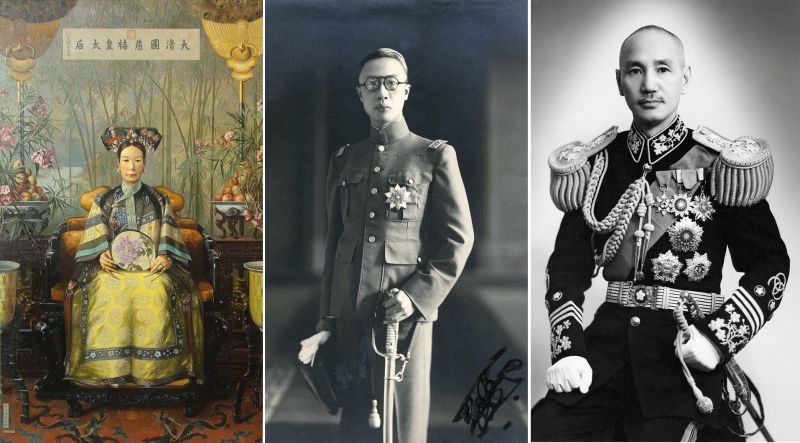
Empress Dowager and Regent Cixi; the Xuantong Emperor, better known as Puyi; Generalissimo Chiang Kai-shek

______________________

A change of opinion about China and Taiwan

Sunday, 7 August to Thursday, 11 August 2022

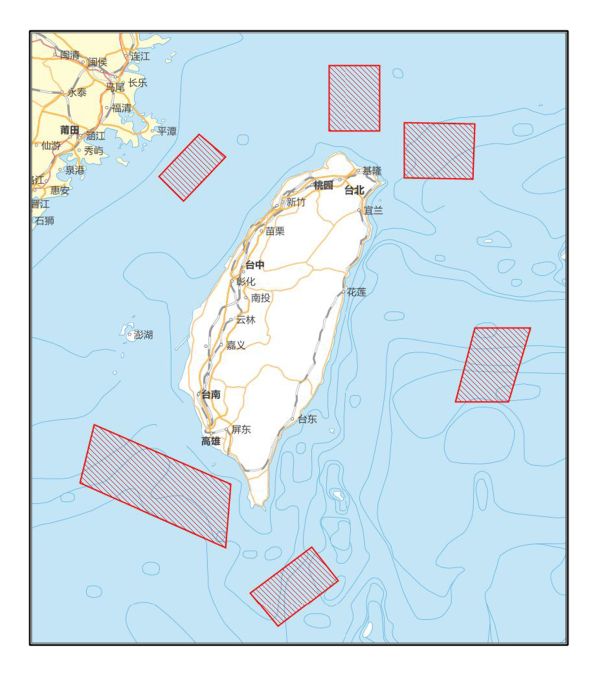
Chinese military exercises and encirclement of Taiwan

Sunday, 7 August 2022 was the day I changed my opinion about Taiwan and China. As recently as last Friday, I had a conversation with a Taiwanese businessman about the possibility that China could invade Taiwan. I mentioned that there are people who can explain in detail why such a military endeavour would fail.

After this week’s visit by the US Speaker of the House of Representatives, Nancy Pelosi, and China’s live ammunition military exercise around the island, I realised that Taiwan only enjoys her de facto independence because China has not yet decided to formally incorporate Taiwan.

Barring the Chinese Communist Party losing its governing power over China or changing its dogma, Taiwan cannot do much to change her inevitable fate. China will eventually pull Taiwan into its sovereign territory, most likely without firing so much as a single missile.

The reason? The island has woefully inadequate resistance to encirclement and blockade. (That’s not to mention the power outage that left a third of Taiwan without power and Internet for almost an entire day in March because an employee forgot to do something before he turned on a switch. How hard would it be for a saboteur to do something similar in the future?)

Rick Fisher, a senior fellow at the International Assessment and Strategy Center in America, reckons that the current Chinese military exercise, which includes more than sixty aircraft and fourteen warships surrounding the island, is indeed a pre-blockade demonstration. According to him, a full blockade would include threats to shoot down aircraft, the placement of sea mines in ports, and the deployment of air and naval forces in a full circle around Taiwan. He adds that this episode is the first opportunity for the Red Chinese Forces to prove to themselves and to Taiwan that they are indeed capable of enforcing a full blockade.

Then there are some other inconvenient facts: 1) According to an article in the Wall Street Journal, Taiwan has oil reserves for about four and a half months, but only 12% of Taiwan’s energy is generated locally. About one-third of Taiwan’s electricity was generated by liquefied natural gas in 2021, which must be imported. If China blocks these imports, it could bring Taiwanese manufacturing to its knees within days. 2) Although Taiwan is almost self-sufficient in aquatic products, fruit, meat, vegetables, and eggs, it can meet only 35% of its population’s food needs. (The government did launch a program in the last few years to address this problem, though. The Borgen Project indicates that in 2018, Taiwan spent $4 billion importing agricultural products, but has since built up stocks of essential items sufficient for about 28 months.) 3) Thousands of other types of products are unloaded from cargo ships daily to stock store shelves – items such as clothing, shoes, cat litter, cooking oil, toothpaste, cheese, shampoo, baking soda, medicine, and a wide range of electronic devices and medical equipment. These products make life liveable and enjoyable for Taiwanese citizens and thousands of foreign residents. Life on the island will become increasingly uncomfortable if these products are no longer imported.

Bernhard Billmon writes in a recent article on Moon of Alabama, “China indeed has the capability to completely blockade Taiwan. As the whole area is also under cover of China’s land-based ballistic missiles and in reach of its airforce a blockade is easy to establish and hard to breach.” (My own emphasis) He further writes: “A total blockade of Taiwan would likely bring it to its knees within a few weeks or months. Time that could be used to defeat its air force, air defenses and missiles and prevent attacks from Taiwan on China’s continental assets. China does not have to invade the island. It just has to wait until it is invited to come in.” (Again, my own emphasis)

The New York Times quotes Bonny Lin of the Center for Strategic and International Studies in Washington as follows: “If a military exercise transitions to a blockade, when does it become clear that the exercise is now a blockade? Who should be the first to respond? Taiwan’s forces? The United States? It’s not clear.” According to the same article, Eric Sayers, a former senior adviser to the U.S. Pacific Command reckons: “Instead of announcing a military blockade [the Chinese government] may instead announce an extended military exercise around Taiwan that closes or disrupts shipping routes for 30, 60, 90 days. This makes it less a military operation and more a form of legal warfare to justify an indirect blockade for a duration that Beijing can manipulate.”

One of the points that Taiwanese people often make in discussions about Taiwan’s ability to defend itself is that Taiwan might be defeated, but at great cost to China, given that Taiwanese missiles could hit at least one major city, such as Shanghai or Shenzhen, doing great damage to it before the Chinese Red Army silences the weapons.

But will Taiwan start firing her missiles ending thousands of lives on the Chinese mainland because she is surrounded by the Chinese navy? It’s highly unlikely. If it does happen, China will have no problem convincing the world that they had no alternative other than a military response.

Will America or Japan send their warships to force the Chinese navy to end the blockade? Again: A low probability of this happening.

A few weeks or a few months of dwindling gasoline and food supplies will bring hundreds of thousands of people in Taiwan to the streets to force the government to start negotiations. Remember: Between ten and fifteen percent of Taiwan’s population supports unification with China. After a few weeks of empty store shelves, I have no doubt that that number will be a few notches higher.

Despite the fact that encirclement and blockade will cause problems for the population in the short term and will lead to problems in the international supply chain of computer parts, the Taiwanese economy will not be harmed in the long term. I reckon (off the cuff, no data to back it up) that Taiwan will be back to 100% two years after the blockade ends. This undermines another argument that people make about why China will not launch any aggressive actions.

I believe that a large majority of Taiwan’s population is willing to fight for the preservation of the status quo, or for de facto independence. As a long-term resident of Taiwan who is grateful for the home the island and her people have provided me, I also hope that the island and her people will continue to manage their own affairs as they see fit, as they have proven over decades that they are fully capable of doing so, and that they deserve it as much as the people of Japan or South Korea or any other country in the world.

But we live in a world with certain realities. One of these realities is that the Chinese Communist Party believes Taiwan belongs to China, and that they have the right to formally incorporate Taiwan into Chinese territory whenever and however they see fit. Until recently, I thought it meant Chinese soldiers on Taiwanese beaches, and thousands of missiles raining down on Kaohsiung and Taipei and other cities.

The past week has proven that a Chinese takeover of Taiwan need not be nearly as violent. Which makes the likelihood of that happening uncomfortably high.

To summarise:

1. Advocates for Taiwanese independence can make good historical and legal arguments why Taiwan is none of China’s business. More important than their arguments: The Chinese Communist government doesn’t care. It is part of Communist Party dogma that Taiwan is part of China. End of story. Microphones turned off. Debate is over.

2. China can start to take over one small island under Taiwan’s control after another and justify it as part of a new strategy to defend China against “enemies of the Motherland”. After that, they can surround Taiwan for months at a time and call it military and naval exercises. No one to be taken seriously doubts that they have the military capacity, the economic capabilities, and the political will to do so.

3. Taiwan can defend itself against an invasion where Chinese troops storm the beaches, and where the Chinese air force rains bombs on Taiwanese cities. But how does Taiwan defend itself against a salami technique where China takes one small island after another with overwhelming force, and then surrounds the island with perhaps three dozen warships and a thousand missiles on the Chinese coast to protect the ships? How long will Taiwan be able to hold out? How long before raging Taiwanese hunger forces the government to negotiate with Beijing?

Any solutions?

Who am I? A fellow at some international think tank, or a senior academic at a renowned university? No, and no. Nevertheless …

Taiwan has spent a fortune in the last few decades on weaponry in the hope that they can do something when Chinese troops storm the beaches on Taiwan’s west and north coasts. There are the high-accuracy missiles that could wipe Shanghai and maybe one or two other Chinese cities off the map. (Let’s ignore for the moment what Chinese propagandists and an all-too-willing Western media will do with video clips of burning children in the rubble of a crushed apartment building in Shanghai. Not to mention cries of revenge among the Chinese population.) There are also ultra-modern warships, military drones, and brand-new F-16 fighter jets.

What value will this advanced military equipment have if Taiwan is encircled for months in extensive “military exercises”? Are all these fighter jets and warships and drones and missile systems going to convince international airlines not to cancel flights to Taipei? Will it convince shipping companies to take a chance to try and break through the blockade to deliver toilet paper and cat food and baking powder and olive oil?

The problem is that Taiwan, and the US government pushing the Taiwanese government to spend billions of dollars with US arms manufacturers, are preparing for a battle that will probably never be fought. Why would China risk thousands of Chinese troops, billions of dollars’ worth of weaponry, and possibly a few Chinese cities if they can succeed in their decades-long goal with blockades, encirclement, and the sabotage of infrastructure? Then the Chinese Red Army is also guilty of what the deputy head of the Taiwanese Ministry of Defence’s Political Warfare Bureau calls, “cognitive warfare, disinformation campaigns, and rumor spreading”, as well as “‘fake news’ or misinformation, mostly seeking to lower public trust in Taiwan’s government, [to] undermine public morale and build momentum for unification by force”.

Aljazeera reports that Taiwan has a defence budget of more than $20 billion for 2022. What percentage of this budget is allocated to the development of more agricultural land for food production? How much has been budgeted to teach city dwellers to plant vegetable gardens on the roofs of thousands of apartment buildings? How much money is spent on protecting infrastructure from sabotage? (Remember again: in March, a third of the island was without power and large parts without Internet for most of the day because someone made a mistake with a switch.) How much money is spent combatting cyber-attacks, disinformation campaigns and other cognitive warfare?

The fact is, Taiwan is a David spending billions of dollars on a highly advanced slingshot with a pile of explosive stones in preparation for a fight against a Goliath who is not stupid, and who probably won’t do what David wants him to do so that he can sling a stone into his forehead. What will David do if Goliath unleashes dozens of wild dogs that surround him and cut him off from his food supply and other resources? What will David do when he has swallowed his last crumbs of bread with the last drops of water in his sachet? And Goliath still refuses to come closer so that David can hit him on the head with a stone as the story is supposed to go?

If Taiwan wants to continue to exist as an independent state in practice, they will have to start spending those billions of dollars much better than just filling the pockets of American arms manufacturers.

Afterthought: Thursday 22 September 2022

Taiwan has three options:

1) Declare independence, wait for China’s response, and hope for the best.

2) Contact Beijing and say: “Enough is enough. Let’s work out the technicalities of reunification.”

And 3) Adhere to strict status quo, meaning Beijing does not interfere, but Taiwan makes no declarations of independence nor does anything beyond practical arrangements, such as maintaining trade offices/embassies, to disturb the status quo – this includes no high-profile visits from American politicians.

As it is now, the Tsai Ing-wen administration is walking on the edge of formal independence, and if China protests, the Taiwan government accuses Beijing of violating the precarious peace.

______________________

11 February 2004

It’s a beautiful day.

I stick my head out the kitchen window, look down into the alley, over the roofs of old houses in the adjoining block. The alley, just wide enough for two scooter drivers to pass each other, is filled with the orange glow of the late afternoon sun.

The apartment buildings are grey, but the paint peeling of burglar bars here and there gives the neighbourhood an optimistic colour. The potted plants in the windowsills bear witness of faith in a good life, even if things didn’t always work out as the residents had hoped years ago.

It’s not cold, but something in the air predicts it will be a cool evening. A light breeze starts picking up. An old war veteran emerges to collect his laundry from the balcony.

A perfect day it is not – what day is? – but it’s a nice day. It is Wednesday, 11 February 2004 – a winter’s day in Taiwan.

______________________

And the answer is …

SUNDAY, 8 FEBRUARY 2004

I don’t feel like packing in a mad rush. I don’t want to throw away stuff that has so far been important enough for me to keep. I don’t want to arrive in Bronkhorstspruit and not have my own place and be forced to make coffee every morning in my sister and brother-in-law’s kitchen. I’m not in the mood for arguments about why I didn’t bring enough money from Taiwan to rent a cheap apartment.

On the other hand, I don’t feel like staying here any longer, getting extra classes, and dropping them again after three months – or even to start the classes with the intention of quitting after so many months. (I hate lying or creating the impression that I might do something I know I’m not going to do, like implying I’ll stay at a school at least an entire semester.) I am also not keen on doing the medical – which I know doesn’t weigh up in terms of unpleasantness compared to any of the other things I don’t have an appetite for at the moment.

I’m tired of calling myself a coward. I’m also tired of fiery speeches to nobody other than my own reflection in the bathroom mirror. I am angry – at whom I don’t know – that this type of matter isn’t easier.

I wish I had a team of writers, and a whole tank full of thinkers. I wish, as I’m sitting here behind my computer on a Sunday evening, that I could hear people discussing things in the living room, with the occasional muted laughter, teaspoons jingling in cups of tea and cigarettes being lit on the balcony. Then someone would walk into my office with a sheet of paper in her hand and tell me that a new scenario had been worked out. Or a new plan. Or a new strategy to ensure that the most recent plan would go smoothly.

I hate that I have to do everything alone. Where are all the big mouths who always have so much to say, but who always had someone to help them get a project going? A husband who helped a wife as she was starting a small business from home. Or a wife who kept urging her husband on with a warm plate of food or a gentle message in the neck when the husband wanted to give up. Where’s my partner? Where’s my home-cooked meal? Where’s my neck massage? Where’s my cup of tea? I’m only human, for god’s sake! How the hell am I supposed to do all of it on my own?

* * *

Several hours later. I went to buy dinner in town (rice with meat and vegetables that were cold by the time I got home), tea from the most beautiful woman in town, and a newspaper at a 7-Eleven. I convinced myself there was some or other angle to this whole situation I’m not seeing.

I was thinking of something on my way back, but then I was jolted from my thought process by a teenager with well-groomed hair gliding past me on his bike. I imagined he was feeling good about the fact that he had slipped past me so casually – especially since he had such a good head of hair, and seemingly much more marrow in his younger bones.

Thoughts about the immediate future forgotten for the moment, I adjusted my gears – gently, lest he heard I was planning a comeback. While my bag of rice and vegetables and my bag with the cup of tea were swinging to the one side, I casually muttered something to the other side, and sailed past him. He audibly adjusted his gears, and just as we were rushing into my neighbourhood with the unpainted concrete apartment blocks, he tried to pass me again.

This time I wasn’t going to fall for his childish game, though, and turned in between Blocks 5 and 6.

“Did I come up with something?” I asked myself as I saddled off and slung the food over my shoulder. I replied that I was busy thinking of something, but then got distracted.

“By what?” I asked in a different tone as I made my way upstairs, meaning to pretend like I’m arguing with someone from my think tank.

“By something that motivated me to adjust my gears, and as it turned out, that ended in me getting home a little earlier.”

* * *

I know enough about advertising and marketing to realise something is wrong with the approach to my situation I’ve been following the past week or so. If I – the one who wants to go home – were a consumer, and the plan the product I was supposed to buy, the marketing is hopelessly wrong. I believe I should be willing to give up my life here for the joy of being closer to my family and being in my own country. My idealism dictates that this ought to be sufficient. It makes sense, does it not? My parents and my sisters’ company over a plate of barbecue or a bowl of pudding would make me “feel I belong somewhere”.

And if you have written hundreds of pages on the subject of “going home” you become aware of your credibility suffering damage because you are spending yet another Sunday night in Taiwan nibbling cold rice while you’re supposed to be frenetically throwing excess baggage out of the window.

* * *

To go away from here will have a negative effect on my mind. The pros and cons of my life in Taiwan have been articulated ad nauseum, but it should again be noted that certain positive aspects of my life here should not be ignored or underestimated.

I live alone in a three-bedroom apartment (for the sake of argument this is a positive). I don’t need my own motorised transport. If I want to go downtown, I ride my bicycle to the train station and take the train. If I want to go somewhere else that can’t be reached within thirty minutes on my bike, or that isn’t within walking distance of a station, I take a taxi (and smile apologetically at all the people who swing their fists at us). At night, I sit until what time writing, or playing card games on my computer. I regularly buy video CDs at three for R20 [$3.00] and watch them on my second-hand Toshiba colour TV. I remind myself every now and then that Hong Kong is just an hour’s flight away (the border with the rest of China is about an hour’s journey by train from Hong Kong), and Tokyo about three hours.

If I wake up at three o’clock in the morning and I’m in the mood for cereal but my milk has gone sour, or if I feel like a packet of crisps or a salad, or a box of dumplings, I walk three minutes to the nearest 7-Eleven. And most of the time I don’t have to look over my shoulder for someone with a knife or a club jumping out from behind a bush.

(I could go on.) If I want to go to the movies on a Saturday night, I ride my bike to the theatre, see what movies are showing, go to McDonald’s for an apple pie and a vanilla milkshake, leave my bike there and take a short cut through the dark alleys back to the theatre. Or I first have a cup of creamy coffee at the place around the corner. I don’t need a car to get to the movies, and there is no need for someone to come and me pick up.

When I go on a date, it is not only perfectly acceptable to be car-less, it’s also not a problem. Once again, I pedal into town, leave the bike against a wall, meet the woman at a restaurant or at the movie theatre and enjoy the rest of the night without having to worry about my car.

I am aware of the lack of 24-hour cafes in the South African towns where I want to unpack. If there are such places, I’d probably need a car to get there. If I can go there on foot, it means I probably live in a part of town where you have to look over your shoulder. The need for motorised transport also does not end with going to a shop at three o’clock in the morning.

I don’t want to sound cynical but meeting the love of my life in South Africa is also not high on my list of expectations. It may even happen that I later decide to go away once again from my family and my country.

Nevertheless, despite the things I will miss about Taiwan, and despite the fact that I know I’m not on the way to a sweet earthly paradise in my own country, every fibre of my body and each volt of electricity in my soul are drawn in only one direction.

But why, considering this strong desire, and knowing that it is feasible to fly to the country of my origin in full glory on the 4th of March, am I not packing or making arrangements?

If I launch my so-called “revolution” on Thursday, 4 March, I’ll be staring a first month or two in the face that would compare very poorly with the life to which I have become accustomed here. I will probably have to spend the first few weeks in my younger sister’s spare room or at my parents’. I would be forced to kick my feet under other people’s tables until I eventually find my own footing again.

Unlike the last few years my visits would not be as a guest who came back to show his face again and whose wallet ensured that a pecan pie or a bottle of red wine showed up every second or third day on the kitchen table. It would be as the brother who has returned from afar who has to be assisted for a while until he’s back on his feet.

Can I construct an idealistic argument that would make me feel better? Yes, I can. But one that would truly mean something five weeks from now?

Is this just about me, or are even loved ones going to be just human and after six weeks start whispering that “the guy really could have come back with a little more money”?

It is possible to make all the calls and pack all the boxes that will ensure that a March repatriation will be the last chapter of this writing project. But would it not, if I can maintain confidence in myself and ignore the credibility crisis, be more prudent to approach the issue a little better? (Although it seems almost provocative to say I can do with another three or four months, and “There’s no need to rush things.”)

Is shaky confidence in myself, and a credibility crisis sufficient reasons to pack up a life of five years within less than four weeks, and to go and exhibit my arrogant person on a new landscape with more faith than business acumen, if I can do it better in three or four months’ time?

Repatriation, or then the Lifting of My Exile is a product. This past week, I tried to sell it to myself at a ridiculously low price, with sentimental music in the background and threats of losing confidence in myself. But if I don’t approach it in the right way, and consider all the possible side effects, I’m going to drag my feet longer with the take-down of a single wall hanging than is currently the case with the process of renewing my visa.

The product is one that I need. It’s the pill I need to swallow to continue with my life. But to expect that I shouldn’t be at least a little nervous about leaving without much ceremony a place – and a life – that has helped form my identity and personality for the last five years, is to reduce me to the caricature that I’m so keen to sketch of myself.

This is unfortunately how it is, and these are my last words on this particular matter.

It’s Monday, 9 February 2004 at two minutes to one in the morning. I have to go to bed, otherwise I won’t make it to that medical examination tomorrow. How long can I, after all, endure this manic ping pong in my head?

______________________

Taiwan: A brief overview

SUNDAY, 11 MAY 2003

All the material in this book (with the exception of a few paragraphs) date from the Taiwan period of my life. It is important to mention that this book is not about Taiwan; that certain themes saw further development in this environment, and others emerged, is indeed important. A few pages on this specific environment would therefore not be inappropriate.

Geography

Taiwan is approximately 160 kilometres from Mainland China. It lies on the western edge of the so-called “Ring of Fire” – a path around the Pacific Ocean that terrorises populations with earthquakes and volcanoes. No surprise then that Taiwan is mountainous, with some of the highest peaks in Northeast Asia.

A subtropical location means Taiwan enjoys long, hot, and humid summers and short, cool winters. Summers are characterised by heavy monsoon rains, with every now and then a typhoon that storms in from the Philippines or from out in the Pacific Ocean.

As could be expected of a subtropical island, greenery abounds. Apparently, there are also bears and several different types of deer to be seen in the mountainous areas, and if the writer could make it past the neighbourhood convenience store over the weekends, he would surely confirm this.

History

According to the Lonely Planet, humans have called Taiwan home for more than 10,000 years. The first inhabitants, who shared a genetic heritage with people in the neighbouring Philippines, migrated from other islands in the area. By the time the first Chinese people arrived, two aboriginal groups co-existed on the island – tribes who lived on the plains, with other tribes mostly keeping to the mountains.

From the fifteenth century onward, Chinese immigrants arrived in larger numbers. Because most of them hailed from the Fujian Province in China, the mother tongue of most Taiwanese people today sounds similar to the Fujian dialect of Chinese (although Mandarin is the official language of Taiwan).

In the year 1517 the Portuguese took a look around and called the place Ilha Formosa, which translates as “Beautiful Island.” (It was the Chinese who gave Taiwan her current name: Bay of Terraces.) The Dutch dropped anchor in 1624, and they enjoyed some good bear and deer hunting until a Ming loyalist called Zheng Chenggong chased them away in 1661. Because the Qing dynasty had been filling the throne in Beijing at the time, they took charge of the island in 1682. For the next two hundred years large scale immigration took place of the people whose language is similar to that of modern-day Taiwanese.[1]

The next big event in Taiwanese history occurred in 1895. Taiwan was one of the prizes that landed in the lap of the Japanese emperor after a victorious war against China. As part of the growing Japanese empire for the next half century, Taiwan saw a complete overhaul of its infrastructure and industry. By the time Japan lost the Second World War, affairs in China had changed to such a degree that Taiwan’s history was on the verge of another dramatic transformation.

The moment the Japanese pulled out of China, the civil war between the communists and Chiang Kai-shek’s government entered its last, and bloodiest phase. At the start of 1949, Chiang realised his days in the motherland have been counted. He decided to gather on a fleet of ships the cultural treasures of the National Palace Museum, all the money he could lay his hands on in China’s national bank, about a million and a half supporters and 600,000 Nationalist soldiers, and retreat from all the fighting to the lovely island of Taiwan. The idea was to retake the Motherland “within two years” with well-rested troops – and of course to return the treasures to their original home in Beijing.

In the end, Chiang and all his troops grew old in Taiwan. Chiang died in Taipei in 1975 at the age of 87, and as most people know the communists still own the throne in China.

Politics

Chiang arrived in 1949 not only armed with troops, supporters, money, and Ming vases, he also had the foresight to bring along the flag, title, and necessary politicians to give him the right to continue calling himself the Chief of the Motherland. He landed on these shores as the president of the Republic of China, and by the time he breathed his last, he was still the president of the Republic of China.

Until the seventies most of the non-communist world agreed with Chiang that his government in Taiwan was the rightful rulers of all of China. Things started to change in that decade, though, and today only a handful of states still recognise the claims of the Taipei government.

After the United Nations kicked the representative from Taiwan out in 1971, most countries followed suit by closing their embassies in subsequent years – only to continue doing business as usual shortly afterwards as so-called “trade offices”.

What is Taiwan then if not the physical address of the government of China? From 1949 onwards Taiwan had for all practical purposes been governed as separate from Mainland China – even though any Taiwanese would have been thrown in jail if they had suggested anything of the kind until the late 1980s. From the day the top honchos in Taipei received the memo they were no longer regarded as the political masters of China – with Taiwan as one of her provinces – they’ve struggled with a political identity crisis. They nevertheless still had a job to do – to act as a responsible government for the 25 million people in Taiwan.

Why not just change the name to the Republic of Taiwan? To ask this question is to pinch a nerve. Some Taiwanese believe that the island should at some point reunite with the motherland. Others argue that Taiwan should be recognised for what she is and has been for the past fifty years: a sovereign state. And in this strange political situation the last group of people that want to see an official name change for Taiwan is the communist government in Beijing. They believe the moment Taiwan gets a name that accurately reflects the reality is the moment Taiwan declares her independence from the motherland. And then all hell will break loose.

This, then, is the geography, history, and unusual political state of the country in which I have found myself the past four years.


[1] Mandarin is the Beijing dialect of Chinese. Although Chinese consists of numerous dialects, the Beijing dialect serves as the official language of China, Taiwan, and as one of three official languages of Singapore.

______________________