I realised tonight that next week is not just the end of a year, but the end of a decade – my third end of a decade as a full-fledged adult.
The first decade after high school started for me in a missionary house, with me part of a team hoping to convert more people to the Christian faith. The decade ended for me in the streets of Hong Kong, very far from home, and even further removed from any kind of certainty about my own future.
I started the ’00 decade as an overweight smoker with a bad attitude and a problematic self-esteem. Ten years later, I exited the decade at a bit of a low-point – less overweight, no longer a smoker, but financially relatively broke. And I was already 38. The decade did include some of the proverbial best years of my life: I started writing in 2003 as if a fever had taken hold of me, and by the middle of the decade I had met a woman who could only be described as an angel descended from the seventh heaven upon my earthly existence. Nevertheless, the highlights were in the middle of the decade; the end would have made any mortal anxious.
And so began my third decade as an adult. In 2011 I turned 40. I continued with a variety of projects intended to bring about more financial security, and I returned to my writing with renewed dedication. This decade had highlights of a different intensity, and the lows were not quite as low as in the previous decade.
TUESDAY, 31 DECEMBER 2019
What are my predictions on the eve of this fourth decade of my adult life?
No predictions. No short speeches to motivate myself. I’m already happy. I’m already doing much better financially than in previous decades. I’m already living the fuller life I dreamed of in my twenties and early thirties.
Am I prepared to do even better? Am I ready to travel even more, give more, provide more assistance, do more of what I am already doing? Am I ready to experience even more of life? Is there a fuller version of me that I’m already becoming as I type these words?
* * *
One fairly wealthy friend of a friend mentioned this year that the life we – Natasja and I – are living is closer to the lives of billionaires than to the lives of people struggling for survival. “Sure,” he said, “billionaires have fine Egyptian cotton linen and they live in bigger houses, but you – like them – have running water, modern plumbing, stable electricity and high-speed internet. Compare that to people who live in shacks with no running water, no electricity, no internet …”
I was also reminded recently of an old truth: There are things we have no control over; there are some things we have partial control over, and then there are things that depend to a significant degree on our decisions – if you choose this path, then this is the path you’ll be following for the next few months, and maybe for the rest of your life; if you choose that path, that would be the path you’ll be following for the next few months, and maybe for the rest of your life. It is therefore wiser to focus instead on the aspects of your life that you do have the most control over. And if you tend towards honesty and a critical view of things, you’d recognise that you have sufficient control over your own life and the environment in which you live to create the fuller life of which you could only have dreamed when you were younger.
What follows is the most recent note on a topic I don’t really want to think about. If more than ten people regularly read what I write, notes on this subject will definitely get me in trouble. Nobody – but especially not white people, and then especially not white men – is supposed to form any thoughts on this subject that are not in line with approved mainstream ideology. “Why would you after all have any other types of thoughts about it?” anyone might ask. “Are you a bad person? Are you wicked? Are you the devil?”
As is often the case with normal people, thoughts form in my head while I’m in the shower, or on my way somewhere. And because I’m not in the habit of placing a proverbial guard at the gate of my mind, all sorts of strange questions come up. And seeing that the question was then asked, I must address it. Or, I certainly don’t need to address it – especially when I know we’re only supposed to have pre-approved thoughts on certain topics. But I will be constantly aware that it is on the table and that I am ignoring it.
Anyway, here’s the thought. How did the policy known as Apartheid become the reality for so many people – of all races – in South Africa, between at least 1948 and 1990?
A simple explanation is that Apartheid was allowed to become and remain the practical reality for so long because the majority of the population – and the majority of the population were black people – had accepted Apartheid. Naturally people had a negative view of the policy and the political leaders they held responsible, but a critical percentage of the affected population accepted it as the way their society was managed.
Why was Apartheid eventually replaced by a better policy? Because a critical minority among the black population, with allies among other population groups, did not accept Apartheid, and dedicated their lives to undermining it and destroying it as a framework and policy by which the state was governed and the population controlled. This critical minority, which included people like Nelson Mandela and other leaders of the anti-Apartheid movement in the fifties and sixties, as well as Steve Biko and other activists in the seventies and eighties, but also thousands of other leaders who had close ties with the community on a daily basis, finally convinced a critical percentage of the population that they should be supported in their efforts to end Apartheid, and that everything would be better for them when they, the new leaders, were in control of the state.
16:49
The fact is, almost thirty years after the end of Apartheid, there are still white people who believe that Apartheid was “not so bad”, and that “even black people were happier under Apartheid than under a black government”. And there are black people who believe that they were passive victims of something bigger than them, and that they could mostly just wait until their leaders rectified the matter. Both of these opinions are wrong because the truth is a bitter pill to swallow.
(By the way, never trust an academic who doesn’t have a source of income that is independent of the institution, school, or university where they work. By the end of the second decade of the twenty-first century, it is common knowledge that academic institutions follow political agendas, and if academics do not endorse the dominant political ideology, their salaries – with which they pay rent and buy food and clothes – are at stake.)
TUESDAY 26 DECEMBER 2019
12:48
Does it make the misdeeds of the man who physically abuses his wife less evil because she stays with him day after day, month after month rather than escaping with her life?
No.
But what message does it send to women in abusive relationships to refer to them as powerless victims? What hope does it give to women in such relationships?
In the end, you are left with two options:
Option 1: See the woman as a powerless victim. In this case women who never left their abusive husbands don’t have to feel that they could have done anything to improve their own situations. The message to women who are currently involved in such relationships is that they should just hope someone saves them. Because they themselves are powerless.
Option 2: See the woman in a relationship with a man who is physically and emotionally abusive as someone with the ability to do something about it. She would probably have to be smart and courageous to protect herself and possibly her children, but she does have the ability and power to improve her life. This is good news for women who are currently trapped in such a relationship. But the message to the woman who had been in such a relationship in the past, and only got away because her husband died or something else happened to him, is that she could have done something about her situation – but unfortunately never got that far because perhaps she always thought of herself as powerless.
* * *
Seeing that I’m already politically incorrect, and stepping on sensitive toes, another question: When did the oppression of the black population begin in South Africa? Libraries full of research have been done on this, and perhaps my argument could be shot down with a battery of artillery fire from people smarter than me.
At this point I must also make clear that I am referring specifically to the black tribes and other black groups as was known to political leaders and white citizens in the eighteenth and nineteenth centuries.
The history of power politics between white people and coloured people in mainly the Western Cape, between white people and the San in initially the Southern and Eastern Cape, and between white and Indian people in originally KwaZulu-Natal, is different from the history between white groups and various black tribes and nations. Slaves revolted from time to time. The San waged guerrilla war against white farmers and communities. The Griquas forged alliances with other groups and also came into military conflict with white communities on their own.
But between whites and blacks, there were at least a dozen conflicts that qualified as war. There were the nine border wars in the Eastern Cape, and a few uprisings. There were three wars between the Basotho and the citizens of the Free State. There were several bloody wars between the Voortrekkers and later citizens of the Transvaal and Natal and the Ndebele under Mzilikazi, and the Zulus under Dingaan and later other leaders. And then there were several wars between British colonial powers and the Ndebele, and the Zulus. Most of these military conflicts had come to an end by 1880. Up to this time, black and white fought each other as equals. One could argue that white soldiers had guns and cannons, but black warriors had other advantages, not to mention the fact that they could also get their hands on guns – and did use them, as in the Anglo-Zulu War of 1879.
My point here is that I have difficulty swallowing the narrative of the black person in South Africa as a powerless victim of white domination for 300 years. This narrative clearly has political value in the South Africa of the twenty-first century, but I find it extremely strange when people dismiss as insignificant the military power of black nations in the eighteenth and especially nineteenth century. Have these people never read descriptions of Xhosa or Zulu warriors? Have they never read of the military victories that Mzilikazi and Moshoeshoe achieved over white commandos?
My question is again: The oppression of blacks by whites that was such a feature of twentieth-century South African society – when did this chapter begin in the conflict between whites and blacks in Southern Africa? I think the 1880s are a good place to look for an answer.
My next question: After at least a century of sometimes successful resistance – where armed warriors stood against armed militias, how did it happen that the oppression of black people was carried out so extensively after 1880?
14:25
I don’t see black people in South Africa as long-suffering historical victims. There were events like Sharpeville in 1960 and Soweto in 1976, and there were government policies like the passbooks and forced removals, but those were all in the last hundred years. When I think of historical black figures, I see the Xhosa warrior on the Eastern Frontier; I see the imposing figures of Mzilikazi and Moshoeshoe; I see the intimidating figure of the Zulu warrior on the green hills of Natal; I see intellectuals like Sol Plaatje and Steven Biko; I see political leaders like Oliver Tambo, Nelson Mandela, Walter Sisulu, and their wives Winnie Mandela and Albertina Sisulu. I see the period 1880-1990 as a historical anomaly during which a critical percentage of black adults in South Africa seemingly accepted that they were second-class citizens of their country of birth, and when a critical percentage of black adults accepted that their children would become factory workers, gardeners, road workers and domestic helpers rather than engineers, doctors, dentists, scientists, and academics.
Financial independence is achieved as follows: Eliminate all the nonsense and all the options that don’t work for you or that waste your time, and repeat week in and week out the steps that do work for you.
THURSDAY, 21 NOVEMBER 2019
17:33
Thought one: A certain type of statement that cannot be refuted but which either manifests or does not manifest depending on your actions: You are x number of steps away from complete financial independence; You are x number of steps away from your ideal weight, and so on.
Thought two: Another statement that cannot be refuted: A complete list of values that can be delivered to a specific community yields at least one item that you can deliver for a fee.
Natural next question: What community?
23:06
When you talk about making money/receiving money, you are talking about either speculating or selling.
When you talk about selling, you’re talking about providing value to a specific community (or market).
The question, again, is what community, and what value.
I sell to a local language centre my time and my ability to lead an English class.
In other words, they buy my time and a specific ability.
But, as it is with these things, there’s another layer. Because what they’re really buying is my value as a cog in the wheel of their money-generating machine. (Sounds nasty but it works out well enough for everyone.) This value does come in the form of my time and my ability. The students, on the other hand, buy a product at the language centre that will give them the value of improved language skills.
MONDAY, 25 NOVEMBER 2019
12:11
• Accept responsibility for yourself and for the situation in which you find yourself. (This applies if you’re happy with your situation, but also, of course, if you are not.)
• Be grateful, every day, for what you already have.
• Believe in your ability to improve your life and your living conditions by changing how you think about yourself, and about your life.
• Believe that you will see more positive things when you expect more positive things (and see more negative things if you expect negative things), recognise more to be grateful for when you’re intent on searching for such things, and see more opportunities to improve your life if you expect the opportunities to appear to you.
• Eat healthy food, make sure you get enough rest, and exercise regularly enough so that your energy levels are such that you can take the actions you need to take. It’s to a large extent a reinforcing loop: follow a healthy diet, sleep enough, exercise daily … have more energy, which will make you want to take the steps you need to take, the doing of which will again motivate you to eat healthy food, get enough sleep and exercise the next day. On the other hand, if you eat foods that make you listless you’re less likely to exercise, and because what you eat and drink cause mayhem in your body you are less likely to sleep well; which means you’re less eager to do what you need to do to be successful.
15:13
[Some people close to me] still believe money is scarce, and that they will never be fortunate enough to experience an abundance of it. Two options for me, and for my ability to help them:
Option 1: I believe they are right, and that I too will never be fortunate enough to experience an abundance of money.
Option 2: I believe, tragic as it is, that they are somewhat ignorant in the matter, and wrong in their view. I further believe that money is in a way like oxygen: it’s all around us, and you just have to do certain things, and not block the flow, to experience it in abundance.
* * *
All you have to do is open your mouth and draw oxygen into your lungs. After all, you don’t first hold your breath trying to work out whether or not you deserve the oxygen or whether you have a right to it, do you?
Of course you have to earn the money that ends in your pocket and in your bank account – trouble tends to follow those who think they can just stretch out their hands and take money. You also have to earn someone’s friendship and trust, and another person’s embrace and physical touch.
Like oxygen, money is in abundance (according to one source, “All told, anyone looking for all of the U.S. dollars in the world in July 2013 could expect to find approximately $10.5 trillion in existence […]. If you just want to count actual notes and coins, there are about $1.2 trillion floating around the globe.”). So too the potential for friendship and positive engagement with other people and the happiness that so often results from it. But why do so many people believe they don’t deserve happiness? Why do so many people believe they don’t deserve money in abundance, no matter how hard they work?
FRIDAY, 29 NOVEMBER 2019
Most people, if they have to be fair and honest, would have to admit that there are hordes of opportunities to make a lot of money. They must know this, because there has never been a shortage of stories of people who have tried things and have made a success of it. Every week there are new products on the market that did not exist the previous year. There are new versions of old products; new versions of old stories; newer versions of old music; two or more ideas combined to make new products.
Believe there are indeed many ideas for making money, and that you are capable enough to develop such ideas, or competent enough to talk to people who will know what to do, and your brain will, like a recently reconfigured radar, pick up ideas on a daily basis. These same ideas will bite someone else on the nose, and they won’t blink an eye. Why not? Because they don’t believe it’s there. And even if they believed it’s there, they’ll think they’re unable to do anything about it.
* * *
An hour after thinking the previous thought, a woman walked past the restaurant where I was sitting near the window having dinner. She had a canvas bag over her shoulder. The words on the bag said, “There is no place like Tainan …”
The design was okay. I wouldn’t buy it, I thought, because I don’t live in Tainan, but if it said Kaohsiung …
There was nothing special about the font or the colours of the letters. I realised that with one such design you could have a thousand T-shirts, coffee mugs and canvas bags on the market, with different cities’ names on, for probably less than $30 worth of investment.
The world is awash with ideas that will allow you to bring at least a little more value into other people’s lives and make more money in the process. If you believe it, you’ll see it. If you don’t believe it, you won’t see it.
UPDATE: Saturday, 25 January 2020
I’ve been thinking a lot lately about money-making ideas, and how, if you set yourself up for it you’ll receive ideas on an almost daily basis.
This is true. It is, however, crucial to mention that you do not only want to be a RECIPIENT of ideas – you want to be an EXECUTOR of ideas. Without action, the ideas are not worth a red cent.
THURSDAY, 5 DECEMBER 2019
One of the insights I gained recently from one of the books I’m reading is that wealth appears in more than one form. You may think you’re one of those people who don’t attract wealth, but chances are you think that way because you have a narrow view of wealth – you’re only thinking of it as money.
Broaden your understanding and you may see how much wealth you attract in other forms. There are things people give you without you asking – things you need, for which you would have spent your own money if you’d had to buy it yourself; favours people do for you – which would otherwise cost you money; time you were given when you thought you had to do something but now another person is doing it; opportunities you get to meet people or learn things, or gain knowledge that all improve your quality of life in different ways.
You may succeed in attracting these things by acting in a certain way, or by being the relatively good person you are. But because it does not come in the form of cash or numbers on your ATM slip, it’s easy to ignore as the wealth you are actually attracting to yourself on a daily basis.
It is almost a full-time job these days to keep abreast of all the issues buzzing in the media if you want to express your opinion every now and then and not sound stupid. There’s nuclear power, human-related global warming, immigration, right to privacy, freedom of speech, gun rights, use of antibiotics on humans and animals, Donald Trump and Brexit, use of chemicals in agriculture, genetic modification, elites against populists, tax policy, gender politics, people who were born with a Y chromosome and developed into adult males who currently identify as women and participate in sports against other people who were born without a Y chromosome and developed into adult females.
Who can keep up?
Strange thing is, you can’t even talk about these topics, or start expressing an opinion without first making sure which of the basic rules that were accepted until recently in dialogue and debate are still applicable. Does scientific research still matter? Does it matter if ideas have been tested according to accepted scientific methodology, have yielded certain results, have been re-tested and yielded similar results? Is there still room for logical reasoning? Can one still say something is true, or not true?
TUESDAY, 14 MAY 2019
Connections between my native South Africa and my adopted homeland of Taiwan
The United East India Company established a re-supply and layover station in the southwesternmost tip of Africa in the mid-seventeenth century. The family trees of millions of South Africans (including my own family) have ultimately grown and branched out from the original Dutch fortress to the rest of Southern Africa.
The very same United East India Company had already established a presence in southern Taiwan, then known as Formosa, in the early seventeenth century.
There’s one big difference between the two places. The Cape of Good Hope was in the middle of nowhere – which is why it was a good place for a refreshment post. Taiwan, on the other hand, was the centre of commercial activity: Tokugawa Japan to the north, Ming China to the west, and Spanish Philippines to the south. Then there were the Portuguese in Macau, and the waters between the places were infested with pirates who in some cases had lucrative relations with the Dutch, the Japanese, the Chinese, the Spaniards, and the Portuguese.
One similarity between the two Dutch fortresses: local people who had to quickly figure out how to deal with the pale faces with their long hair, and their tubes blowing deadly balls. In the Cape it was the Khoikhoi (also called Khoekhoen) – nomadic cattle farmers, and the San – who were hunter-gatherers. In Taiwan, there were about two dozen Austronesian tribes who were mostly hunters, and occasionally traded with Chinese visitors to the island (before the Dutch arrived).
Another difference is what happened to the Dutch. In South Africa they, and other Europeans, formed the foundation of the white population of present-day South Africa. The Dutch language in the form of Afrikaans, as well as European religion and culture are to this day part of the South African nation. In Taiwan, Dutch control of mostly the western coast of the island was challenged by Ming loyalist Chen Cheng-gong a few decades after their arrival. By 1662, the Dutch had finally lost the battle. Nearly all the survivors, except for a few women taken hostage by the new master of Taiwan, left the island. Only a small number of buildings and some stone walls from the era remain standing to this day.
WEDNESDAY, 9 OCTOBER 2019
I, like most people, fear bad news. It will deprive me of my happiness, I reckon, undermine my sense of general well-being, even deprive me of my right to happiness (“How can I be happy if …?”).
Three points about this:
1. It is a proven fact that you find more effective solutions to problems, and better prepare yourself for setbacks, if you maintain a good baseline for personal happiness most of the time.
2. Your baseline happiness will take a hit when you hear bad news, but it will eventually recover.
3. In every city, town, and hamlet in the world people get bad news on a daily basis – especially the kind you don’t recover from overnight, such as the death of a loved one. If enough people believed that it would be inappropriate for them to ever experience happiness again, it would have a similar effect on the community as a deadly virus. Within a few short years there would only be a minority of people left who would still be considered entitled to happiness (difficult to say how even that would be possible, given how connected people are to each other these days).
The key thought: For me, a socialist state was a world where you wouldn’t feel like a loser just because you weren’t good at “making money”. And for a long time in my life, I thought of myself as exactly that person.
THURSDAY, 28 NOVEMBER 2019
In my mid-twenties and early thirties … I was always looking for seeds that I could plant, something that could bring me a return. “If I could only get the right seed, I’ll prosper!” I thought. Lots of seed came my way, more than I could ever plant. I spent money on seeds, thinking that the seeds you buy would be of better quality than the seeds you get for free. Then I’d plant the seed, and not much would come up (“what am I doing wrong?”). Or the yield was too meagre, or the plant died.
Was the seed bad? Some of it was, but enough was of high enough quality.
The problem was the soil. I never prepared the soil for the seed.
How should I have prepared the soil – myself and my mindset – for the seed from the beginning, from my early twenties? I should have quit smoking, eaten healthier, gotten enough rest and exercised every day. I should have expanded my skills – another language, business writing, basic psychology, persuasion skills, basic web design, graphic software … not necessarily to make money with it, just to prepare the soil.
TUESDAY, 3 DECEMBER 2019
Years after you made mistakes or walked down the wrong paths, you’re still stuck with the result – with the scars, and the crippled legs or crooked arms. It’s like Morgan Freeman’s character in the film Shawshank Redemption said to the parole officer after a few decades in prison: “There’s not a day goes by I don’t feel regret. Not because I’m in here, or because you think I should. I look back on the way I was then: a young, stupid kid who committed that terrible crime. I want to talk to him. I want to try and talk some sense to him, tell him the way things are. But I can’t. That kid’s long gone and this old man is all that’s left. I got to live with that.”
What do you do? You accept responsibility for your actions. You then continue to live as someone better – not as the same person who made specific mistakes or committed transgressions. You do better. You live better. You work hard to be a new person. Every morning when we wake up, each of us has the opportunity to renew ourselves mentally, and to start a physical process that could later be regarded as nothing less than a rebirth.
Sometimes you become interested in something, and then, once you start learning more about it, you lose interest. The Vietnam War (1955-1975, or more specifically 1962-1973) is not such a historical theme. My interest in the war was initially aroused by the 1982 Sylvester Stallone movie, First Blood, about the veteran struggling with the local authorities in a small town in America. The main character, John Rambo, experiences flashbacks of his time in Southeast Asia. He remembers booby traps and ambushes in the dense jungles of Vietnam, as he tries to survive in a similar environment outside a fictional town in Washington state.
In time, information drifted into my teenage brain that America – the strongest military power in the world – had lost the war in Vietnam – a country of mostly poor peasants.
My interest was aroused, to say the least.
By the mid-eighties, there was the Oliver Stone movie, Platoon – which I didn’t quite understand, other than that everything was messed up and that the Americans couldn’t work out what went wrong. A few years later, the series, Tour of Duty, showed on South African television translated into Afrikaans as Sending Viëtnam (Mission Vietnam), with as theme song the ominous Rolling Stones number, “Paint It Black”.
For me as a teenager, with music from the era with which I identified more easily than with 1940s music, the Vietnam War felt closer than the more well-known World War II we learned about in school. Add to that the mystery of the American defeat, with half of America supporting the war, and the other half marching furiously through the streets, and later even veterans of the war growing their hair and beards and protesting against the war, and it’s no surprise that the Vietnam story became a glowing lamp for the moth of my interest.
Although the old Saigon, now known as Ho Chi Minh City, is only a three-hour flight from where we live in southern Taiwan, I never strongly considered going there until recently. Maybe I reckoned that post-war Vietnam with its billboards advertising Coca-Cola and with commercial districts filled with modern office buildings would be somewhat of a disappointment to the serious student of History.
Nevertheless, by mid-2019 we decided the time had come, and by August our tickets had been booked.
* * *
I have read quite a bit about John F. Kennedy and the war, and Lyndon Johnson and the war. I read about the background of the war including the French colonial period; the period during World War II when Japan finally took control, and then withdrew; the Cold War between America and the Soviet Union; the failed Bay of Pigs Invasion and the Cuban Missile Crisis. I read about Ho Chi-Minh and the quest for national liberation, and about the legendary victory Vietnamese nationalists achieved over the French at Dien Bien Phu in 1954. I read about the Diem regime, about Buddhist protests against the South Vietnamese government, about the monk who set himself on fire in the middle of a busy intersection in Saigon in 1963, and about the Dragon Lady who said if more monks wanted to set themselves on fire, she would gladly provide the matches. And I read about Henry Kissinger and Richard Nixon in the last years of American engagement, when everyone already knew that America had made a colossal mistake to get involved in Vietnam (and that it was, to put it simply, a monumental fuck-up).
Having said that, my interest was always more audio-visual than academic: Images of rice paddies with peasants in conical hats bent over in the hot sun; American soldiers walking in a line on the wall of a rice paddy, machine guns ready for any incident; huts with thatched roofs in small hamlets set on fire by an American soldier; soldiers with panicked faces in a jungle; the Vietcong in black pyjamas flashing through the dense vegetation, only to disappear seconds later into a tunnel network; helicopters flying nose forward over rice fields and jungles, with a gaping open door, and a soldier leaning on a machine gun. And then of course the music from the mid to late sixties, and the early seventies.
* * *
On Sunday, 10 November 2019, I enjoyed my usual breakfast in our apartment in Kaohsiung, southern Taiwan, like any other morning. By Sunday night, N. and I were in Ho Chi Minh City. We arrived that afternoon at Tan Son Nhat International Airport, which at one point was one of the busiest military bases in the world.
The process of going through immigration and customs was more laboured than one might be used to. We had to download a form from a webpage two weeks before our departure, fill it in and email it back – on which we received another letter showing our names with our passport numbers along with the names of two or three dozen other people who would also go through immigration that day. After landing, we had to hand this letter – which we had to print out – with our passports and twenty US dollars cash to someone behind a counter. Our names were called after fifteen minutes, and then we were allowed to join the long queue to get stamps in our passports.
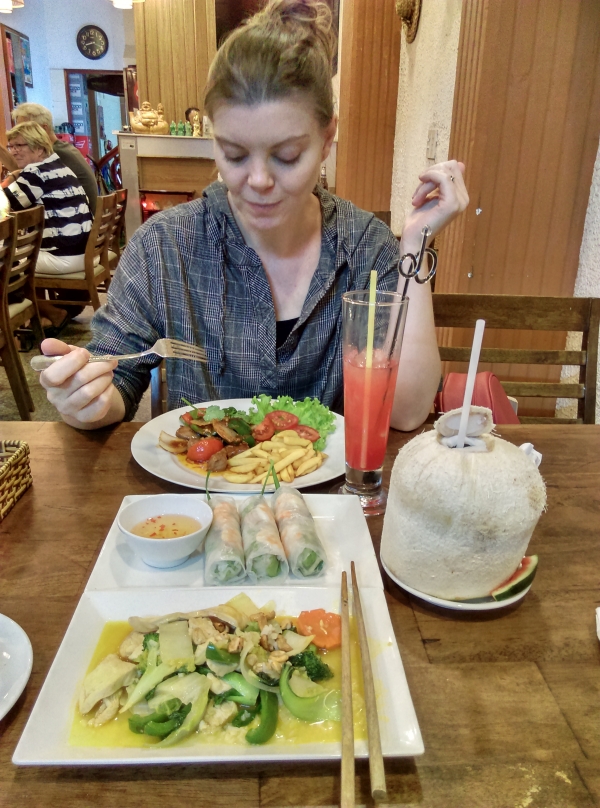
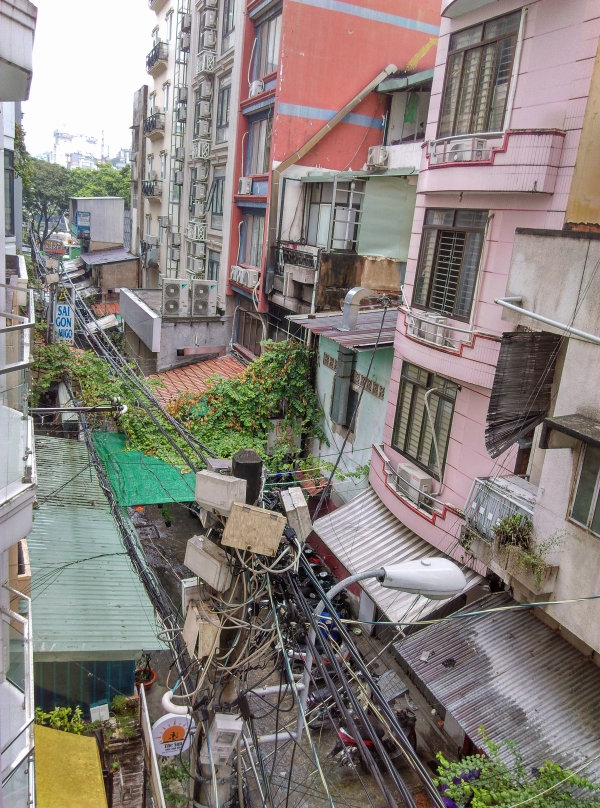
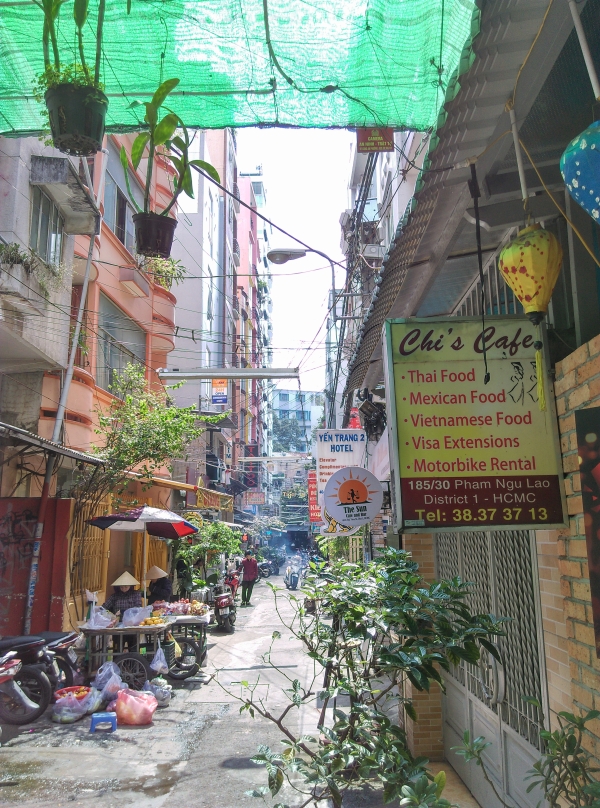
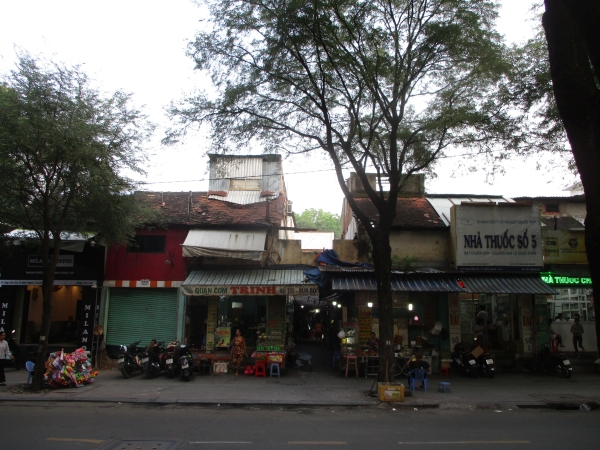
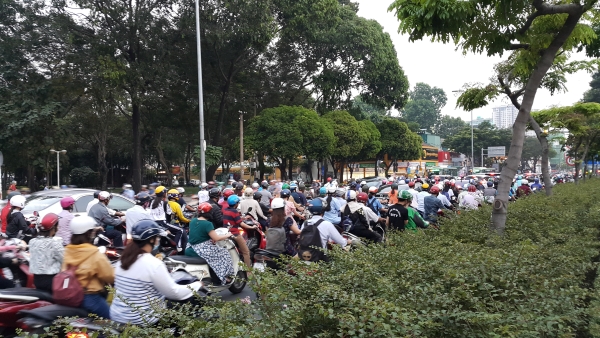
After immigration we got SIM cards (very easy, and cheap), and walked straight to a bus stop where the correct number bus happened to be waiting. And we were on our way – through busy streets full of motorcycles and scooters and taxis and buses and brightly-lit shops. More or less in the vicinity of our lodgings, we wandered through the streets for about fifteen minutes, and after finding our hotel in a colourful alley, we enjoyed our first dinner.
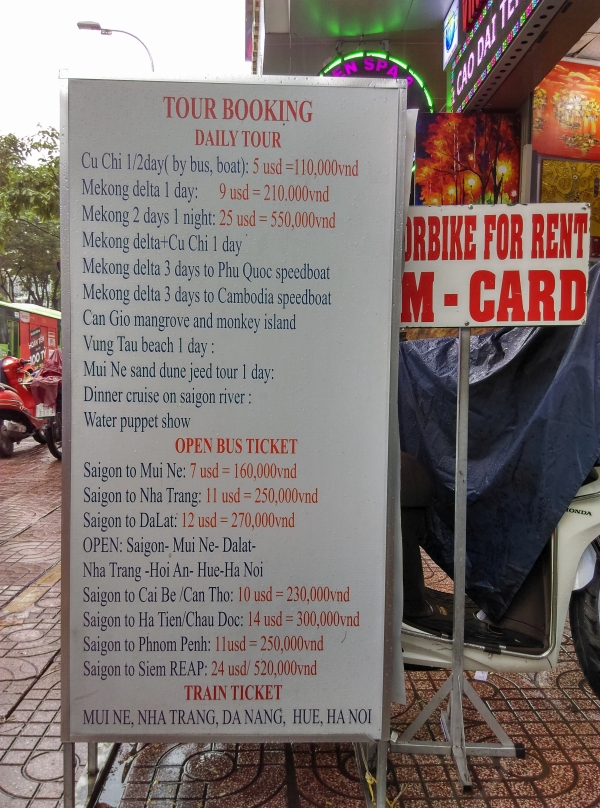
Advertisement for tours to places in the area, including to Cambodia
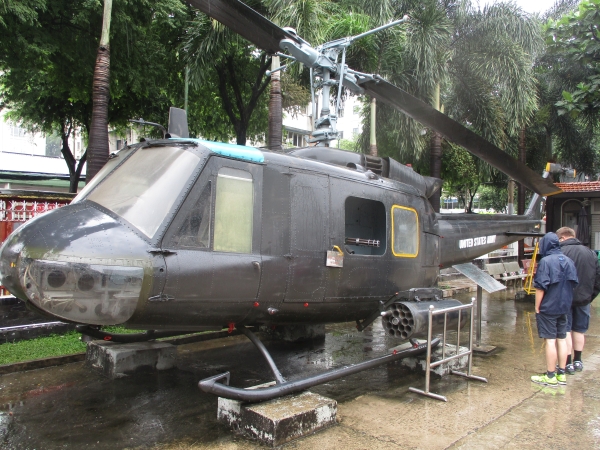
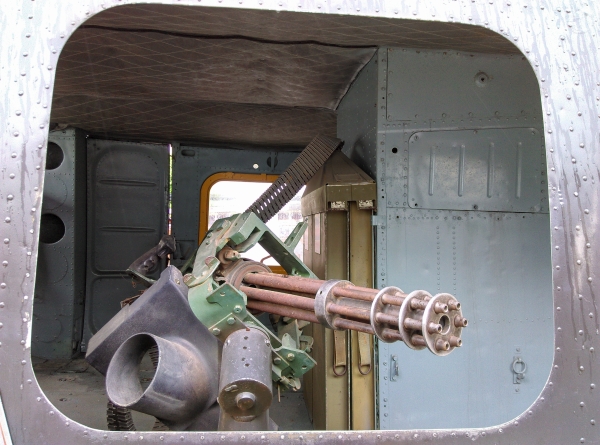
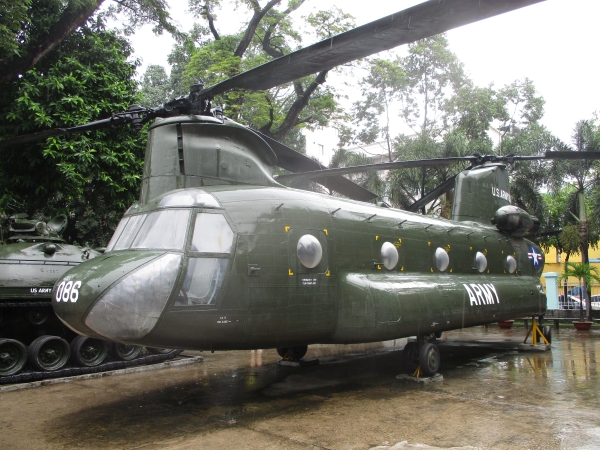
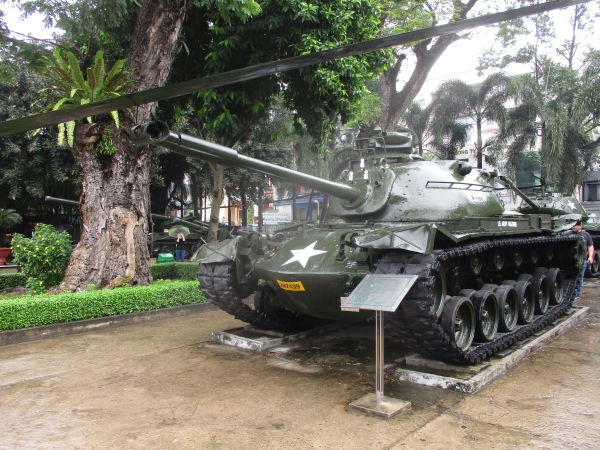
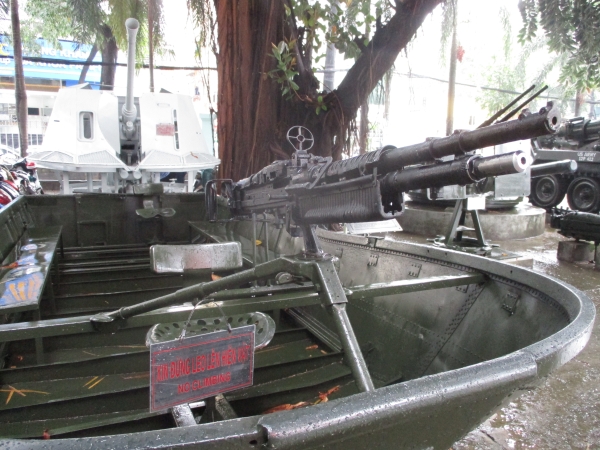
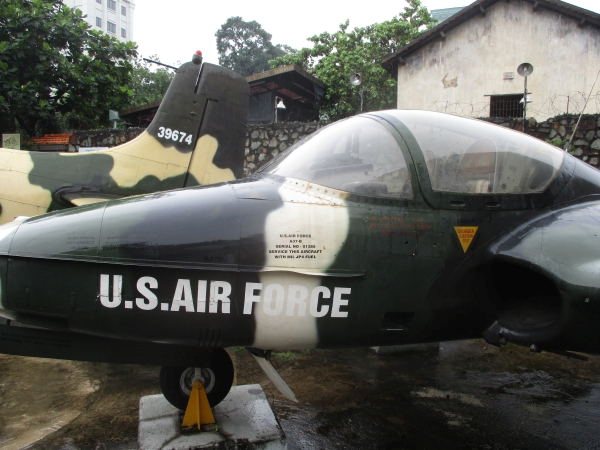
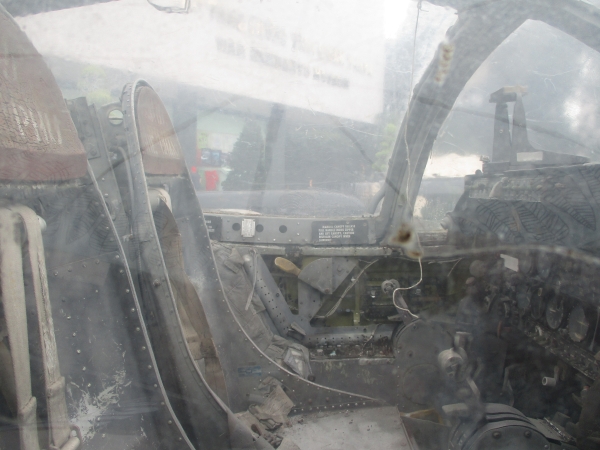
Monday morning we hit the streets. First stop was the War Remnants Museum – where tanks, aircraft and helicopters abandoned by the Americans on their withdrawal in 1973 are on display. The museum also has numerous items and photographs of the cost of the war – not just in material terms, but the terrible costs paid by ordinary men, women and children.
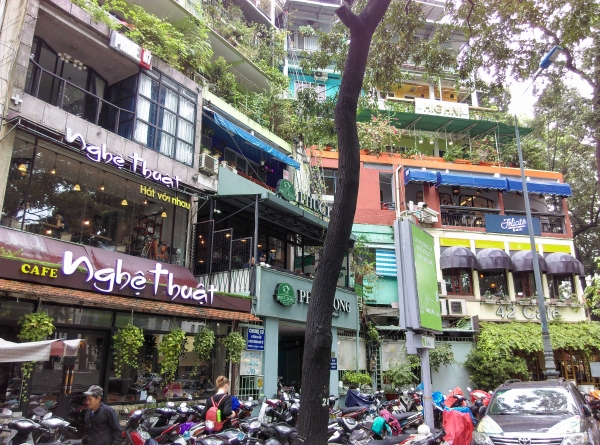
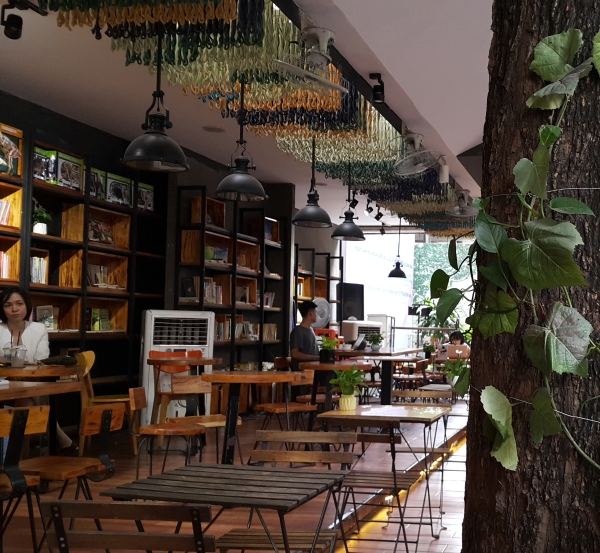
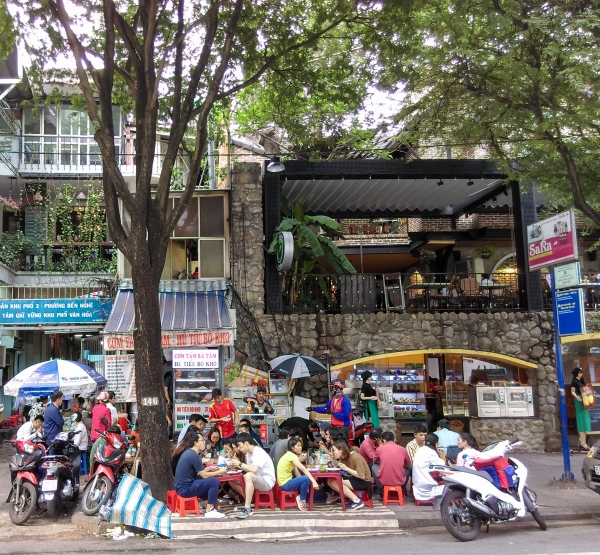
Multiple storeys of coffee shops in the vicinity of the museum
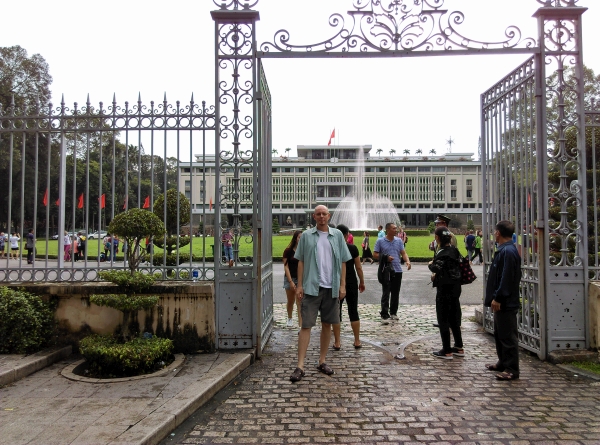
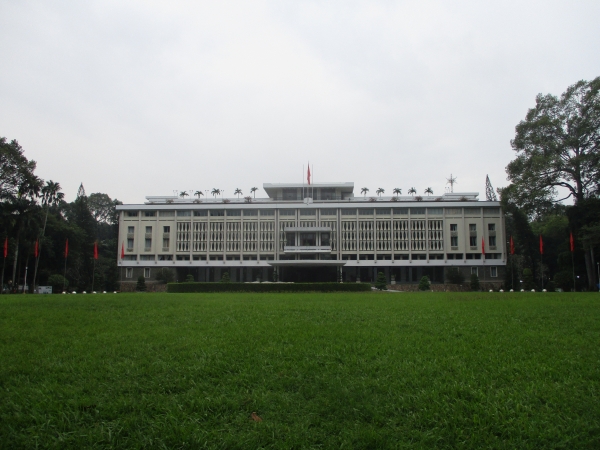
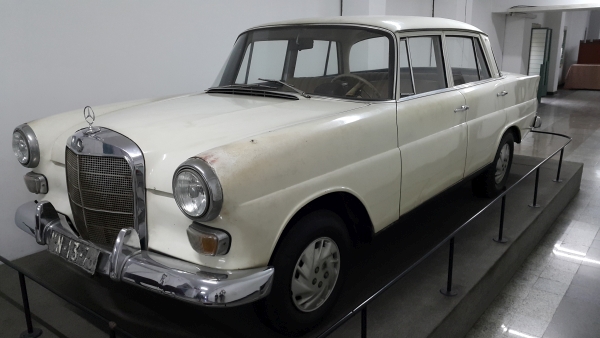
Next stop was the Independence Palace, built in 1963 at the behest of the then South Vietnamese president, Ngo Dinh Diem, after the previous building that served as presidential residence was partially destroyed by two bombs intended to get rid of him.
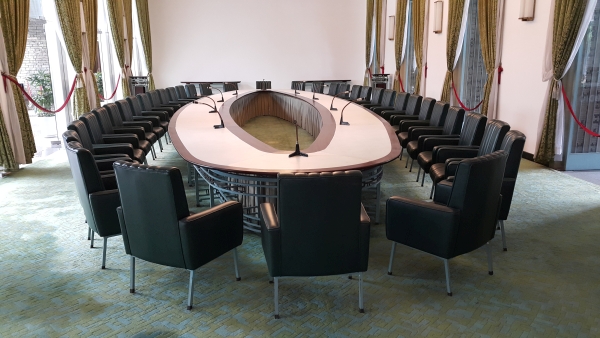
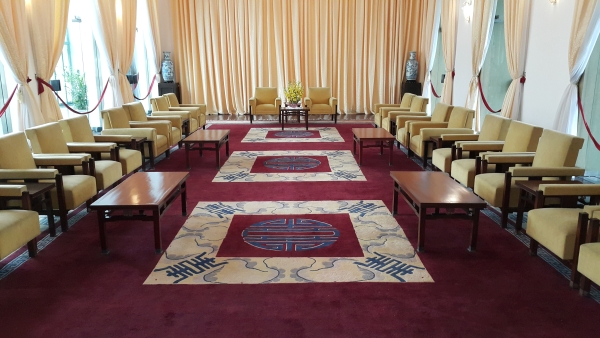
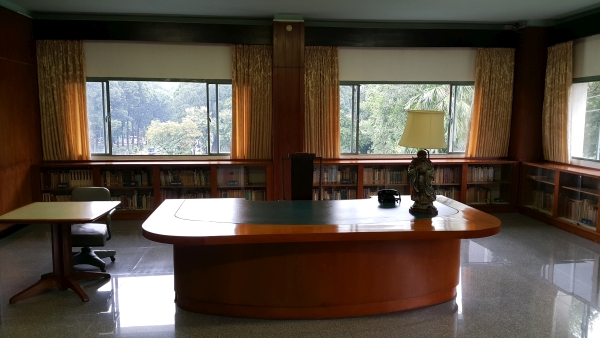
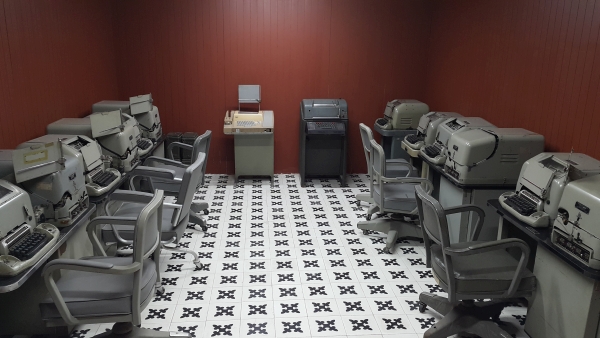
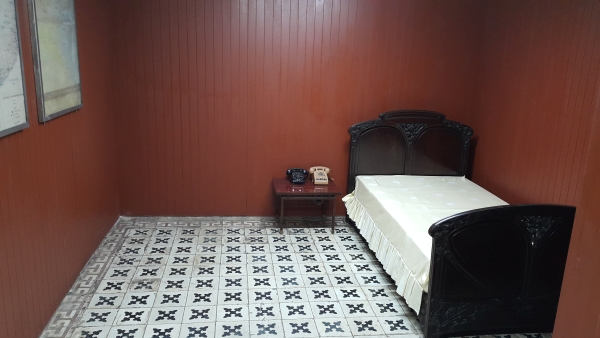
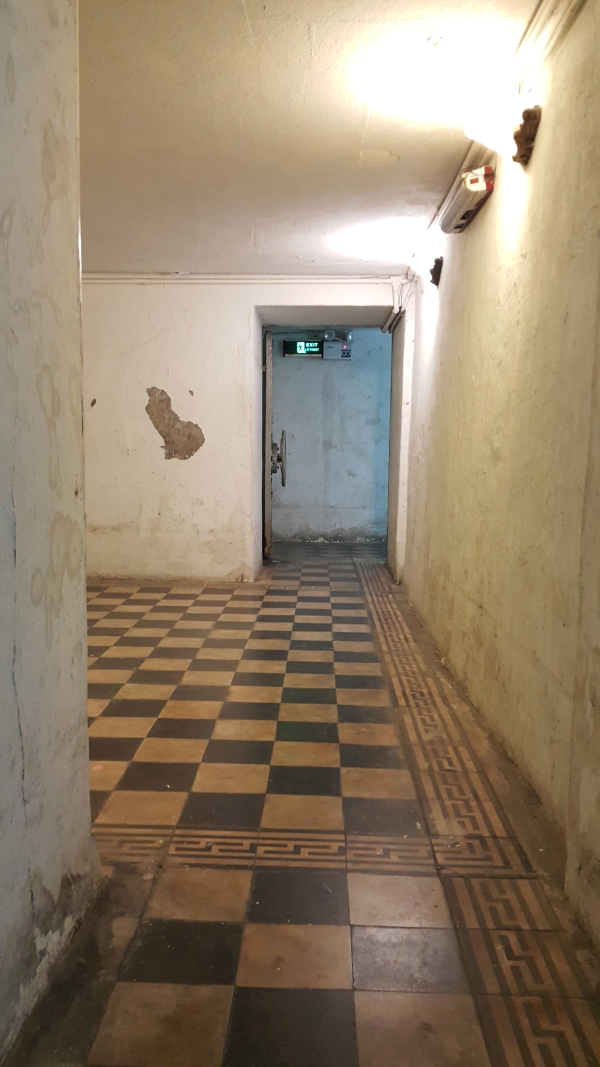
The palace is a time capsule – furniture and carpets from the 1960s and 1970s, maps on the walls of war rooms where generals and politicians discussed strategy, books in the library, telephones and other communications devices that gather dust in rooms in the basement that served as a bomb shelter.
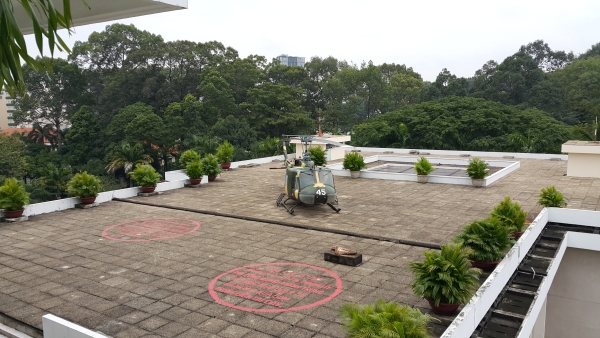
There’s even a helicopter on the roof at the back of the building that still seems to be waiting to transport the last president of South Vietnam to safety. That the helicopter is still on the roof is a testament to the fact that the last president, Duong Van Minh, the third president in ten days and in the hot seat for only two days, refused to flee, even when North Vietnamese tanks and troops finally burst through the gates on 30 April 1975.
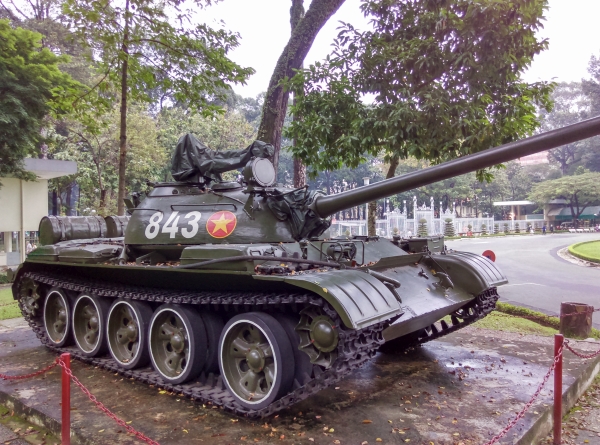
To round off the visit, we viewed a separate exhibit on prominent Vietnam leaders over the past 150 years or so, and then went to take photos at two tanks parked near the gates that were so unceremoniously flattened in April ’75.
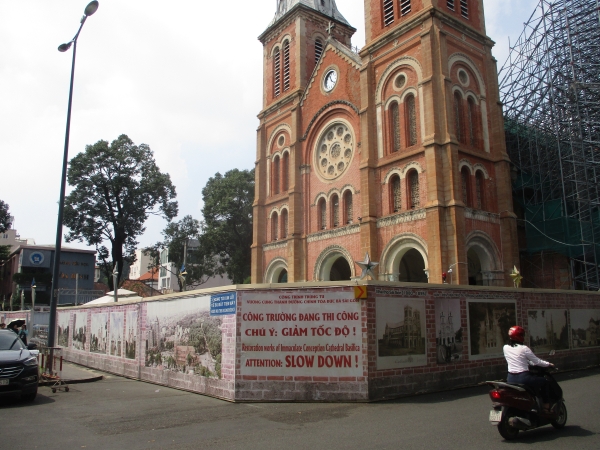
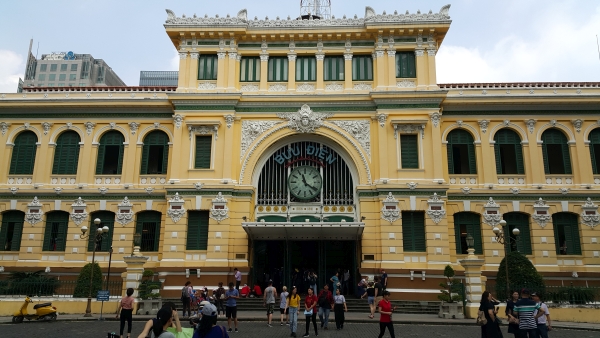
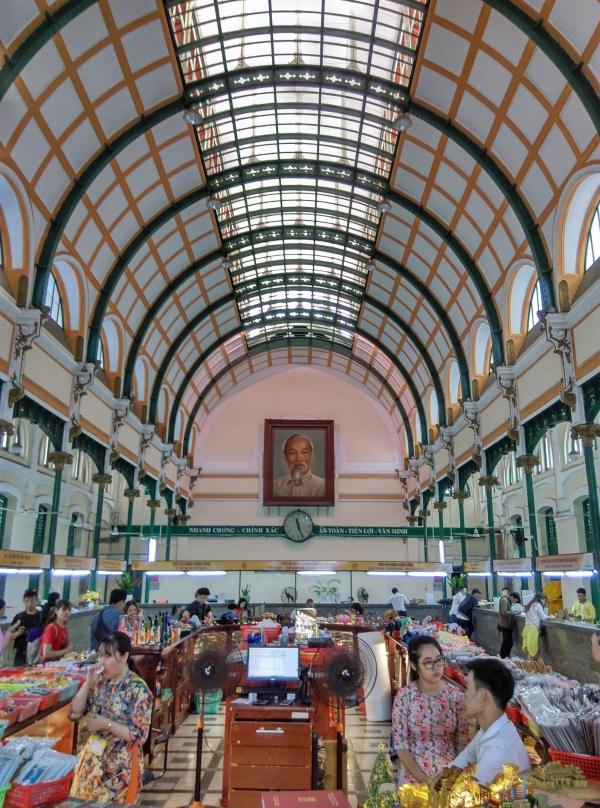
The next day was gentler on the mind: the old Saigon Central Post Office, inaugurated in 1891, and the Notre Dame Cathedral, about ten years older than the post office.
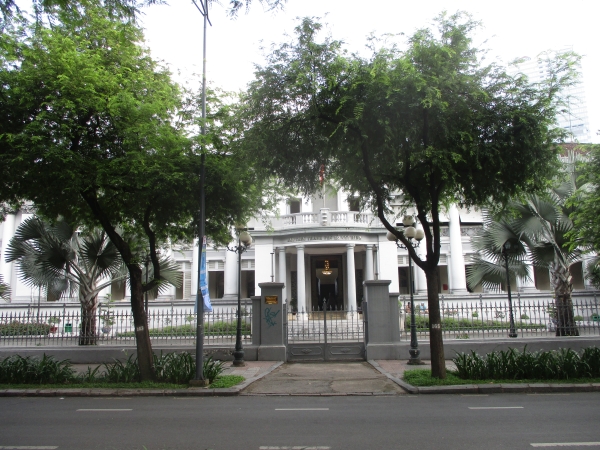
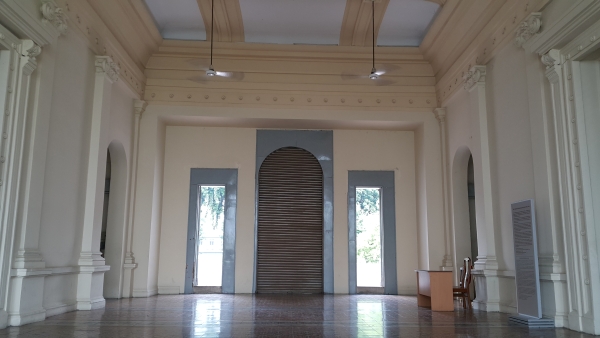
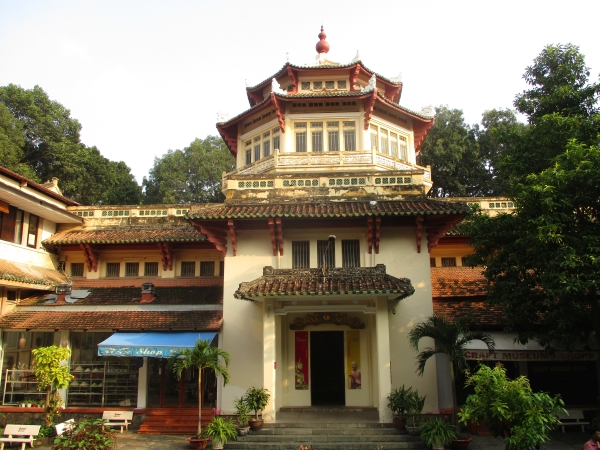
Then it was the turn of the Gia Long Palace – now the Ho Chi Minh City Museum. The palace was built in the late 1880s to serve as a museum, but for decades had been used as an official residence by various civil servants.
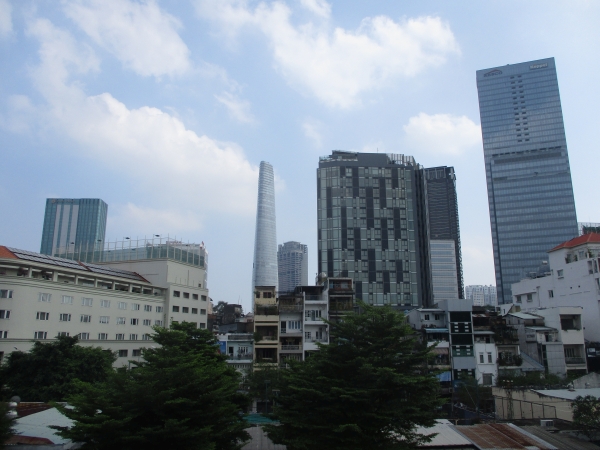
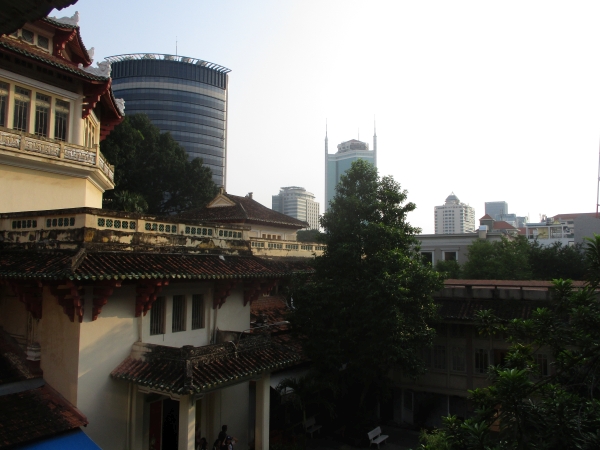
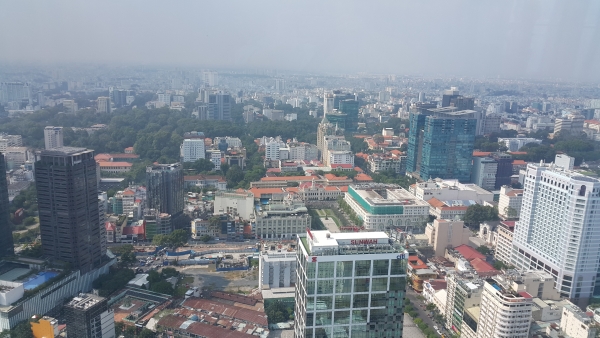
View of the commercial district from the back of the Gia Long Palace
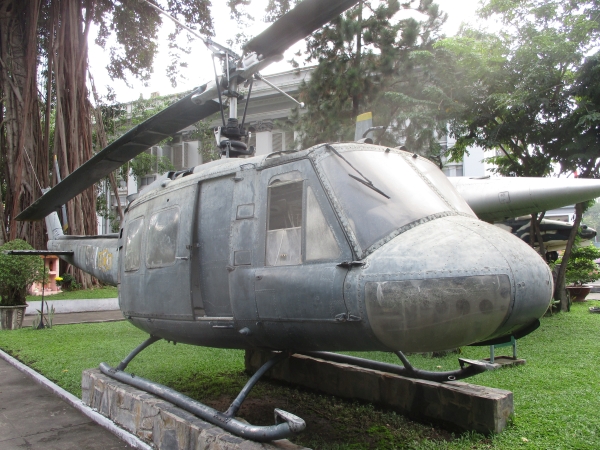
Another left-behind helicopter, on the lawn of the museum
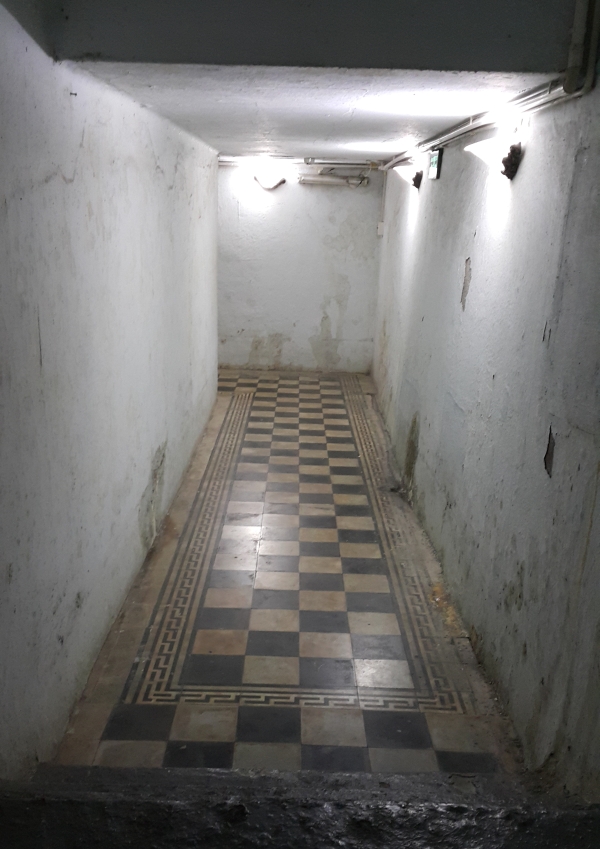
The exhibits were interesting enough, but my interest was more the events of late 1963. On 1 November of that year, a group of South Vietnamese generals launched a coup against the government of Ngo Dinh Diem. Diem and his younger brother and main advisor, Ngo Dinh Nhu, their older brother, Ngo Dinh Thuc, and other relatives had lived in the Gia Long Palace since Diem ordered the Presidential Palace (the old colonial governor’s residence) to be demolished and rebuilt in 1962. By late afternoon of November 1st, the brothers were aware of developments, and escaped the palace through a secret tunnel.
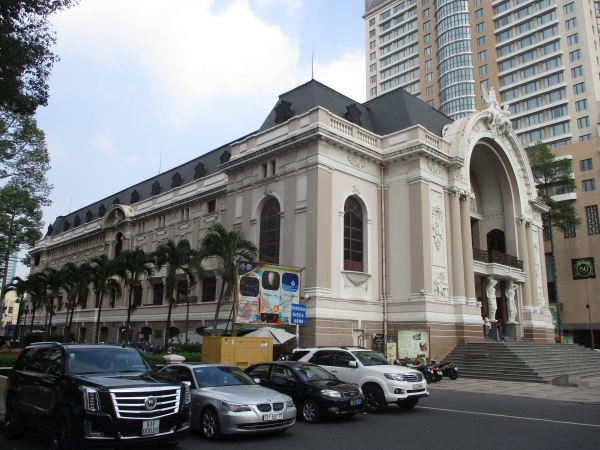
After the palace, we checked in at the Saigon Metropolitan Opera House (dating back to 1897), stopped for beer and sandwiches, and then walked the two kilometres or so to the Vietnam History Museum via Google Maps instructions.
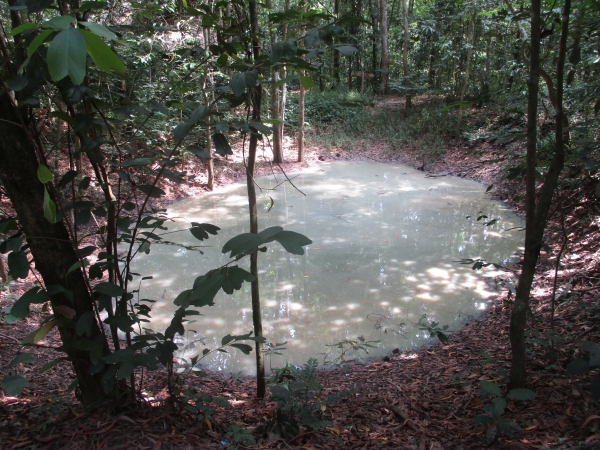
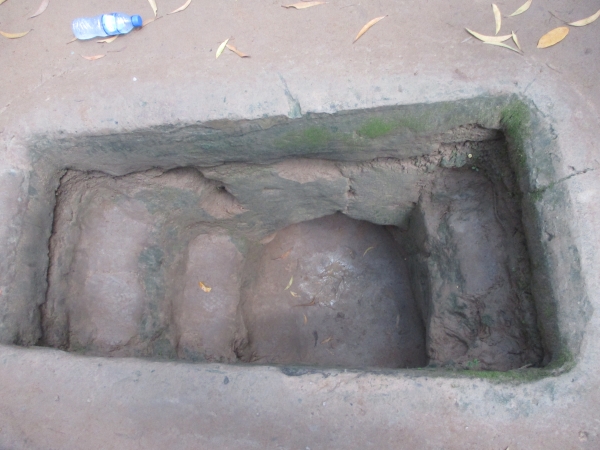
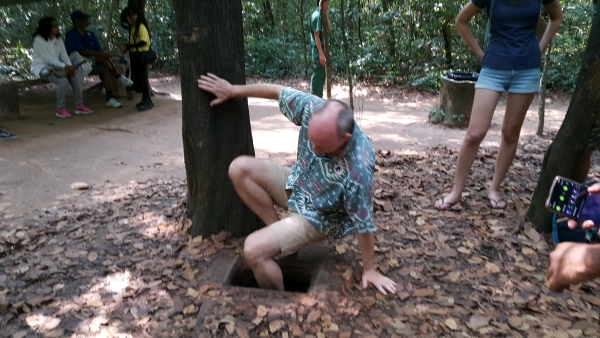
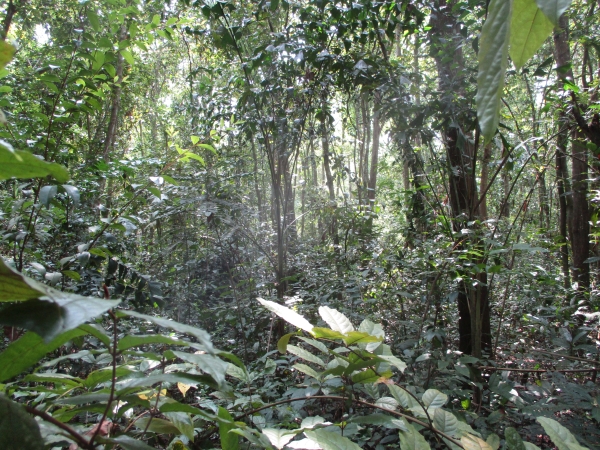
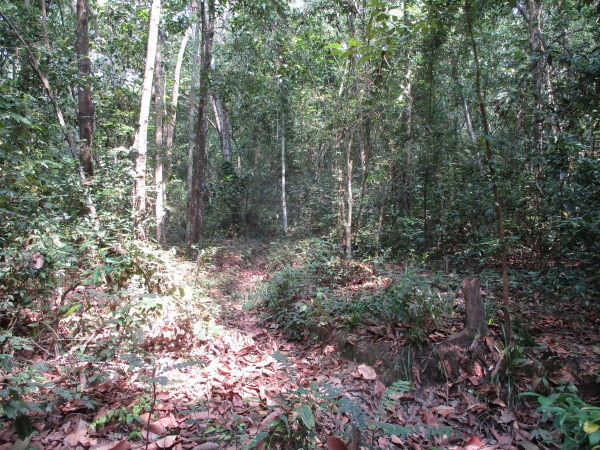
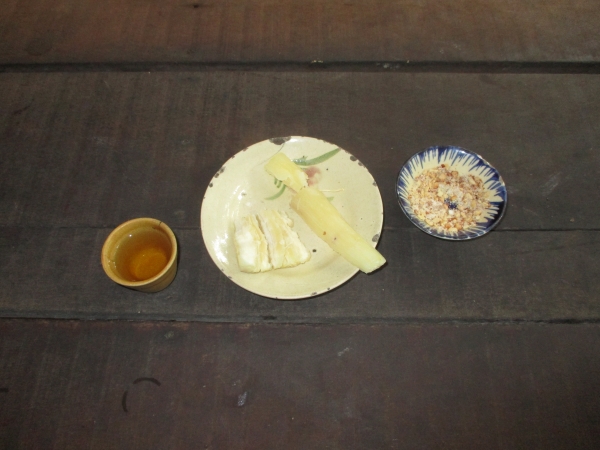
On Wednesday we were up early to join the two-hour tour to the Cu Chi Tunnels – part of an extensive network of tunnels used between the fifties and the seventies to smuggle weapons, troops, food and other supplies into South Vietnam. As it befits a tourist attraction, there were refreshments and souvenirs for sale.
For me this was quite an important experience: after so many films and TV shows about the war to stand in a real piece of Vietnamese jungle.
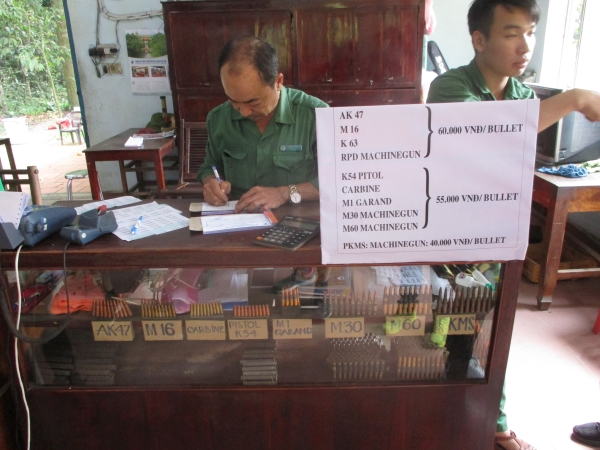
For a price you could also play soldier and pull the trigger a few times on one of the weapons used during the conflict: R40 ($2.60) per bullet for M16 and AK47; somewhat cheaper for other weapons.
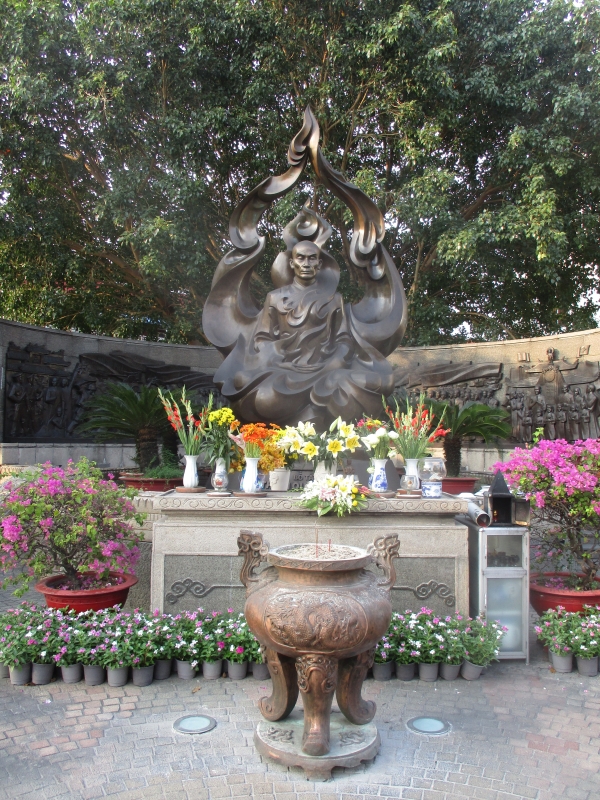
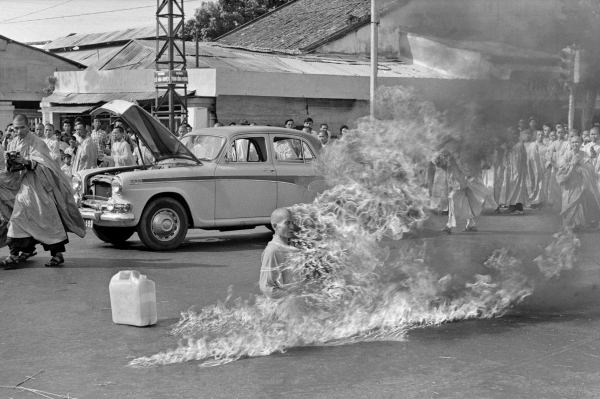
After going for a light lunch back in Ho Chi Min at the Ben Thanh Market, it was time for a bit of a pilgrimage for me. I had been fascinated for some time by the act of protest of the Buddhist monk, Thich Quang Duc, who set himself on fire at a busy intersection in the then Saigon on 11 June 1963. For years, there had been strife between the Diem government and the Buddhist majority population, and Duc’s self-sacrifice made front page news worldwide. I had been under the impression that the incident occurred in the city of Hue (that’s where his blue car is still kept), so when I read the previous night in my Wikipedia research that it did indeed take place in Saigon, I knew I had to see the intersection for myself. As it happened, the intersection was only about ten blocks straight down the road from our hotel.
Credit: Malcolm Browne / Associated Press
That night we strolled around the commercial district and walked past the Rex Hotel – another iconic war-era building. The first guests, 400 US troops, signed in in 1961. They were the first company-strength soldiers to arrive in Vietnam, and stayed in the Rex for a week until their camp was ready. The hotel was also where the US military leaders held their daily press conference during the war. And the rooftop bar was where military officials and war correspondents hung out every night. In 1976, it was also at this hotel where the reunification of Vietnam was announced.
On Thursday, I dragged my travel companion to another place of importance only to people with a somewhat extreme interest in either the former South Vietnam or the Vietnam War, or both.
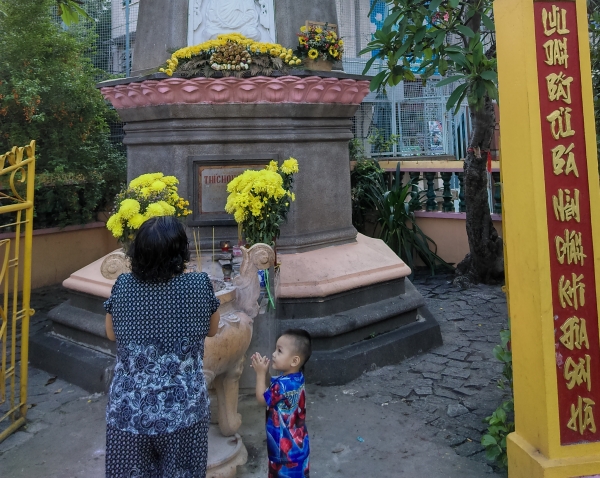
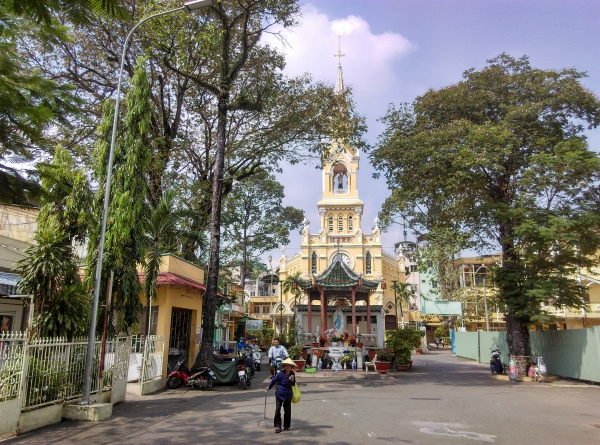
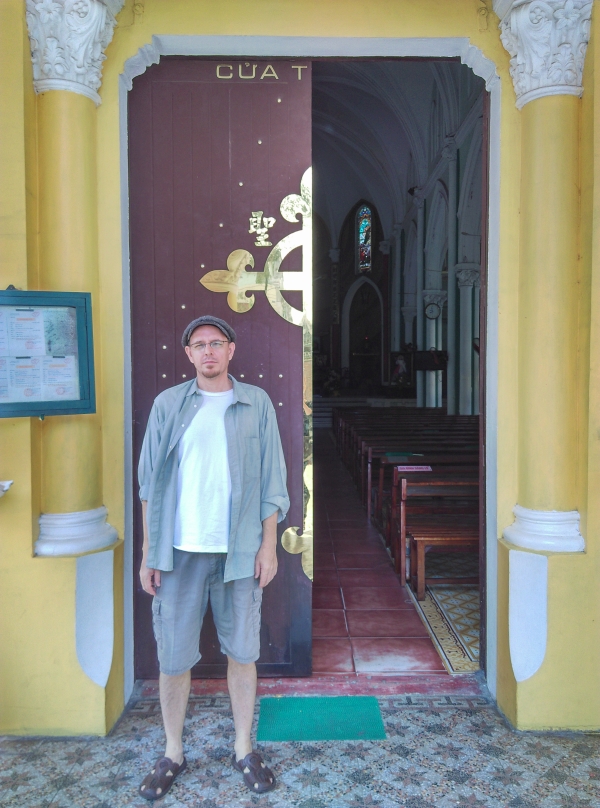
As mentioned earlier, the two Ngo brothers were aware of a coup attempt against their rule in November 1963. After escaping through a secret tunnel, they were taken to the Chinese business district in Saigon. They spent a few hours at an ally’s house, then went to the St. Francis Xavier Catholic Church. Here they sat at the back of the church while an early service was underway. Shortly afterwards, they were recognised in the courtyard of the church, and by 10:00 in the morning an armoured personnel carrier with two jeeps stopped in front of the church. The two brothers were arrested. The plan was to take them to military headquarters, but when the convoy stopped at a railroad crossing, the bodyguard of one of the coup leaders first killed one brother, and then the other in the back of the vehicle (it is still not clear exactly what happened and why).
Seeing that I was knee-deep in sixties politics and South Vietnam and the war by this time, it made sense to pay a visit to the church where the brothers spent their last moments before their downfall.
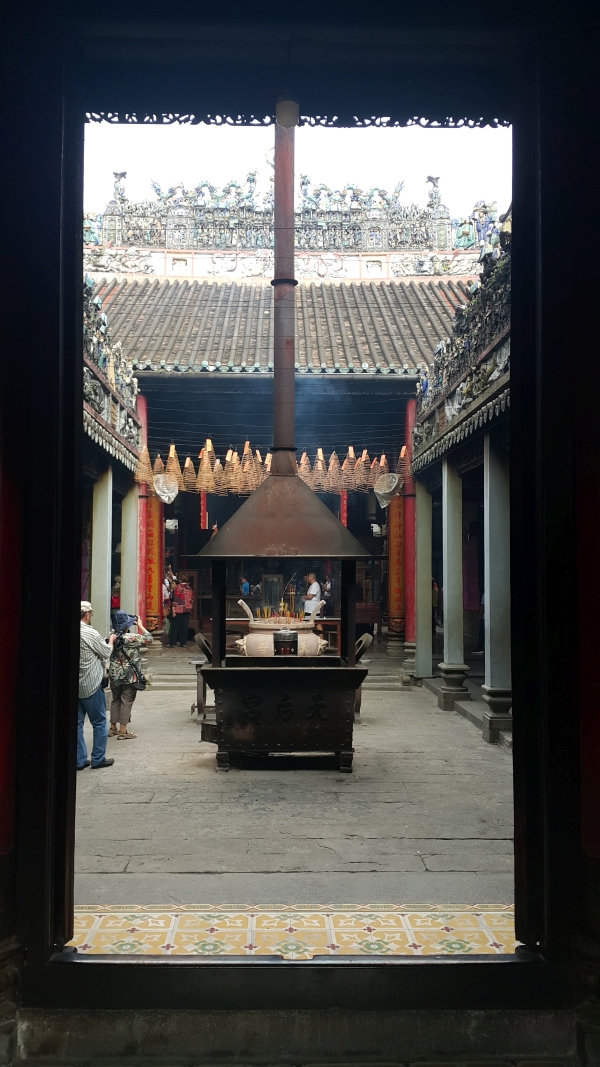
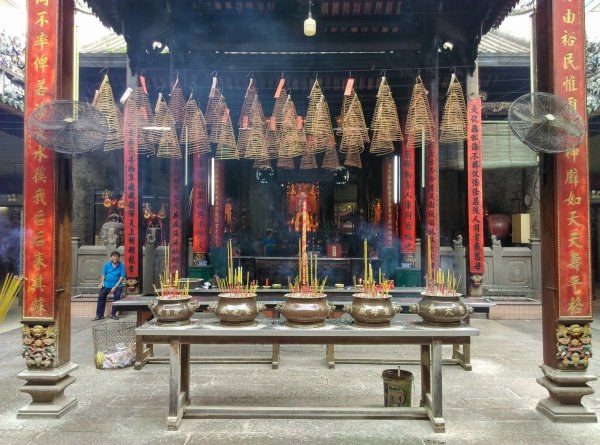
After the church, we walked a few blocks to a Tao temple.
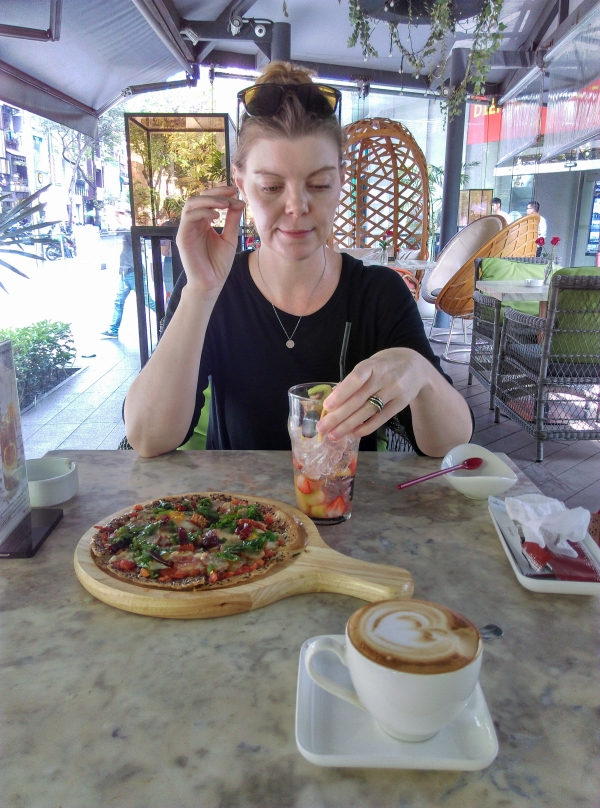
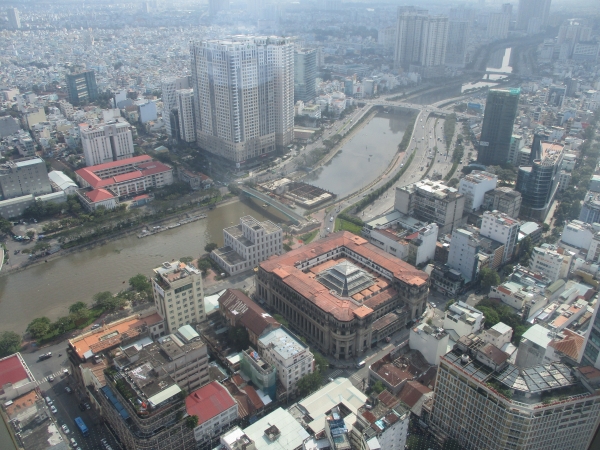
Then we returned to modern Ho Chi Minh where we enjoyed lunch in the Bitexco Financial Tower.
After lunch we took the elevator to the viewing deck.
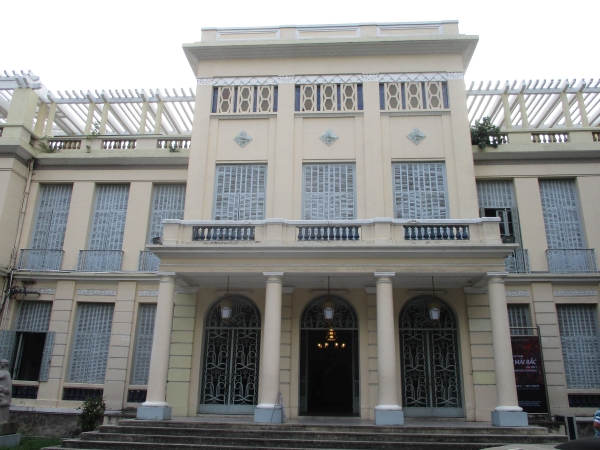
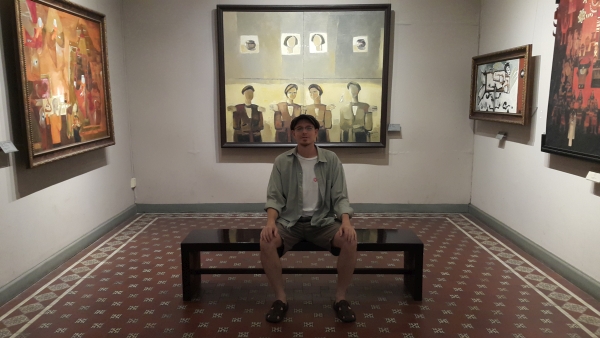
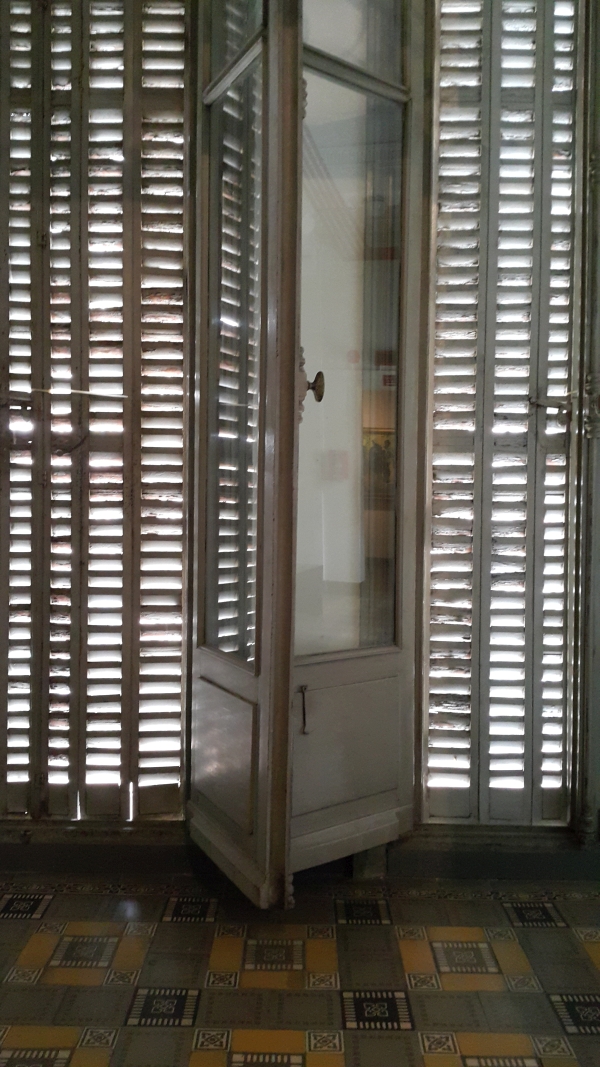
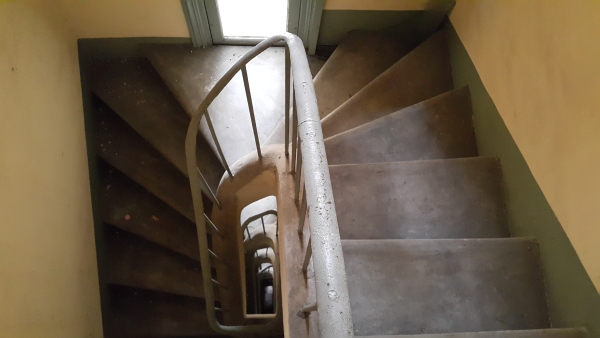
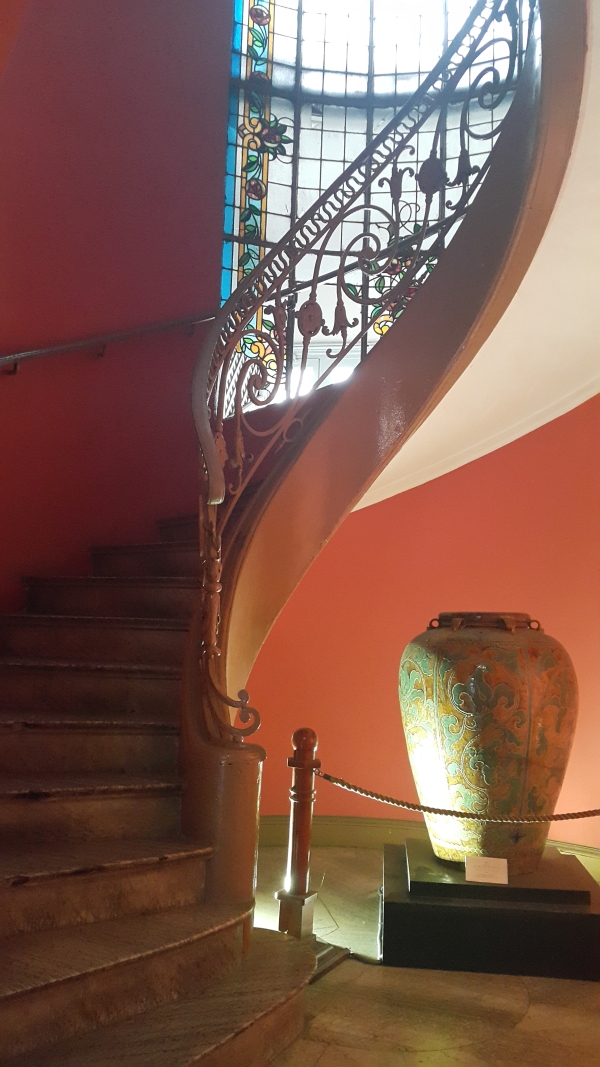
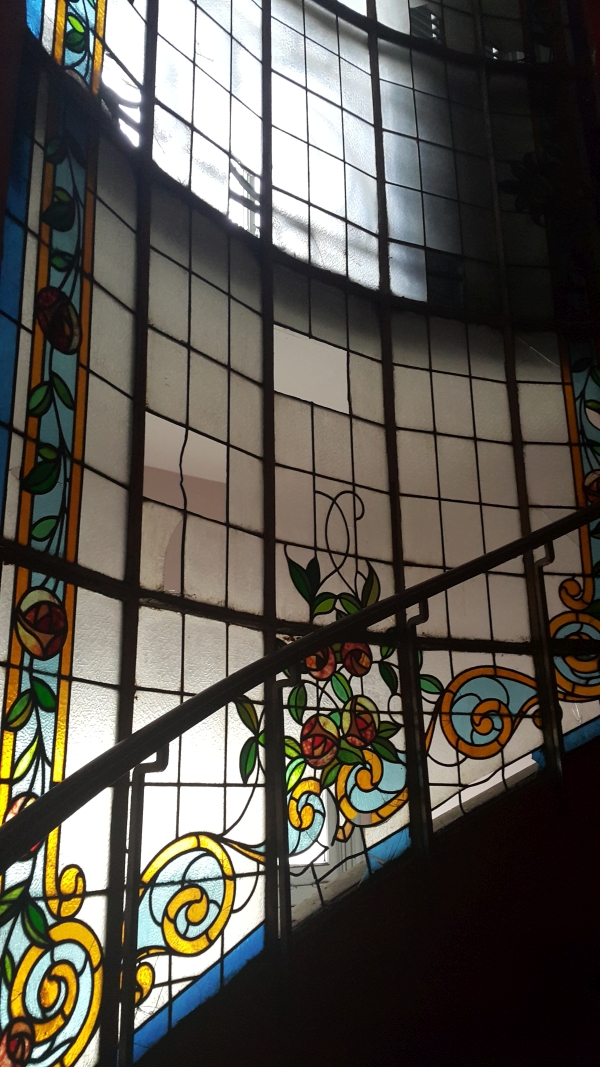
Our last attraction for the day was the Ho Chi Minh City Museum of Fine Arts. The main building was constructed between 1929 and 1934 as a residence for the Hua family. The museum moved to the premises in 1987. There are several rooms with beautiful and interesting works of art, but what attracted my attention most were the architecture, the rooms themselves, and things like the staircases, the shutters and the stained glass windows.
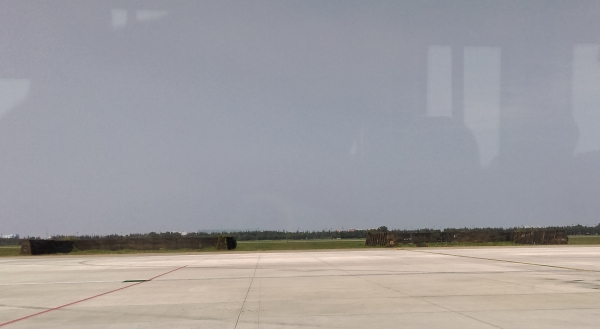
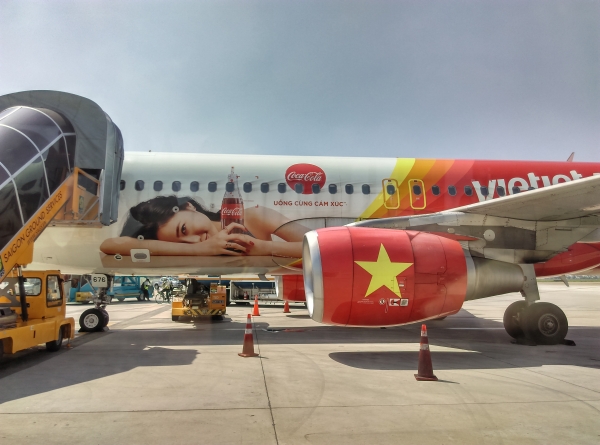
Friday morning we were on the sidewalk early to take a bus back to the airport. Like when we arrived, the bus was on time and very comfortable. At the airport we had to stand in another long, winding cue. We rewarded ourselves with a pleasant breakfast in the Duty Free section. About an hour after our designated departure time, a bus dropped us of at an airplane with a photo of a Vietnamese woman with a bottle of Coca-Cola in the hand. Strange concrete structures on the edge of the runway were a last reminder that this piece of land and the country itself were just a few decades removed from one of the most brutal conflicts of the twentieth century.
Two hours after we landed, I was already back in a class in Taiwan. And Saturday morning it was breakfast again at home – like any regular weekend.
To view more photos, please visit my Flickr albums: