Word games

SATURDAY, 12 JULY 2003

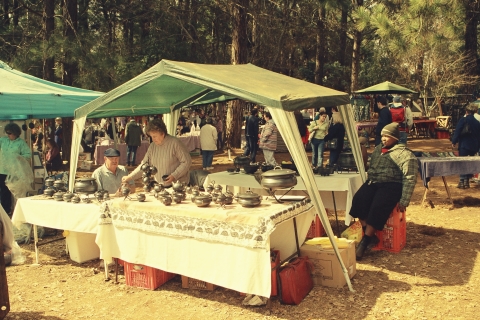
[The Irene Craft Market, forty kilometres north of Johannesburg, is a bustling epitome of creativity. Every second Saturday of the month people from everywhere in Gauteng (and beyond) set up stalls to hawk their paintings, handmade jewellery, homemade clothes, sausage rolls, pancakes, and homemade lemonade. My parents also make use of this opportunity to promote and sell their unique pottery collection, and to hopefully earn enough cash to fill up the tank and make it back home (about 160 kilometres away).

On this particular Saturday I also made my annual appearance, to appraise all types of homemade items, test as many sausage rolls for quality as I possibly can, drink coffee at R5 per cup, and stuff pretty much anything in my mouth that looks more or less edible and which I know I won’t get in Taiwan.

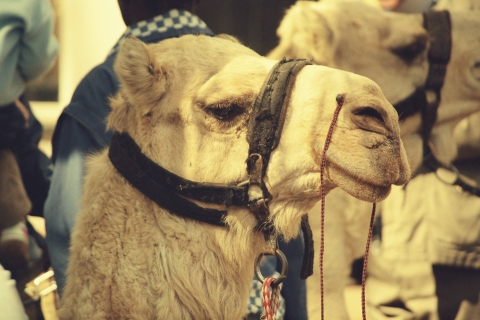
In between all the hard work I also took pictures of camels and recorded the following piece of scientific truth in my notebook:]

STRUGGLE-CREATE-COMMIT-BELONG

STRUGGLE-COMMIT-BELONG-CREATE

Struggle precedes creation. Belonging is the end result of commitment. But you also struggle whilst you create, and create whilst you belong. The one feeds the other. But struggle must lead to creation, as commitment should lead to belonging.

______________________

Reason for uncertainty, and a new mantra

THURSDAY, 10 JULY 2003

I’ve identified a weakness in my future plans. Financially it can work, but there is an uncertainty that shines through in my idea to perhaps set up home in Bronkhorstspruit, and then to return to Taiwan for a few months.

In my usual scientific way, I worked out that it had to do with identity. I know who I am, how I want to live, and what I want out of life. As long as I stay in Taiwan, this is all possible. As soon as I set up home in Bronkhorstspruit, so I reckon, I’ll be a little uncertain about whether who I am, how I want to live, and what I want out of life is still going to be so anchored in External Reality.

I took a nap, and the message came through: Be who you are – a writer.

The uncertainty disappeared almost immediately, like a playground bully would vanish when his victim’s older, bigger brother arrives on the scene.

The reason for the uncertainty is that I have a terrifying anxiety to live an aimless, meaningless existence. Just living in Bronkhorstspruit and making “enough” money is not good enough for me. In Taiwan I’m a teacher, a writer, and a student. If I make it clear to myself that I will continue to be a writer in Bronkhorstspruit, then I am saying that I will also there know who I am, how I want to live, and what I want out of life. And there it will also be rooted in external reality.

* * *

I look through my old photos (1990, 1991, 1997), and I read through old journals (1996, 1997) and I begin to wonder: Have I at least done something with my life in the past seven years, and perhaps more specifically the last four and a half years?

The answer is: “Yes.” (I asked a similar question a few days ago, so fortunately I already knew the answer.) I have learned over the past seven years who I am, how I want to live, and what I want out of life (thanks to Steven Burgess and his book SA Tribes: Who we are, how we live and what we want from life in the new South Africa for this line I recite like a mantra these days). I also specifically worked on being a writer for the past five years, not merely wanting to become one.

______________________

What I see

FRIDAY, 4 JULY 2003

I always believe everybody has dreams that extend beyond the life they currently live. And I reckon that one or two hundred thousand rand would go a long way to realise these dreams. I further believe that one or two years in a place like Taiwan is the ideal way to muster that type of capital.

What I tend to forget is that the life of an expat is often rootless, and that many people prefer a different kind of life. These people have homes – spaces they have customised and equipped over many years to be exactly how they want it. They have friends and maybe family that live in the same city, or in a neighbouring town. They have pets. They have pension funds they’ve been working on for years. And they dream of having kids – if they haven’t already started a family, and to have these children grow up in an environment familiar to them, the parents. It is a life about which these people often complain, but it’s also a life in which they feel safe. It is a life they reckon they can sustain, and which they hope they can continue living until they hit 60 or 65 and that pension starts paying out.

The fact is not everyone knows what they would do with a hundred or two hundred thousand rand between when they return from a place like Taiwan and when they reach retirement age. People tend to choose what they know – even if it means you have to punch your timecard, the same time every morning, for forty years.

______________________

The poet learns to be smart

[The next piece was initially recorded in my notebook on the weekend of Friday, 27 June to Sunday, 29 June 2003, in my favourite place in this region, Hong Kong.

There was a problem with the booking of my flight between Hong Kong and Johannesburg. I arrived in Hong Kong on Friday morning at eleven o’ clock, but because I immediately had to meet an old friend at the airport, I didn’t confirm my flight to Johannesburg later that evening.

After brunch in the city my friend had to rush back to the airport. I walked around for the rest of the day and enjoyed myself thoroughly. At around nine o’clock in the evening back at the airport, a lady at the check-in counter courteously informed me that they were overbooked. She further explained that I had no choice but to wait for the next flight – which would only depart on Sunday night.

At first, I was taken aback. I had only had two hours sleep the previous night, and I was exhausted from all the walking around that afternoon and early evening. The lady assured me that they would provide a room in a good hotel, and a limousine that would take me directly to my lodgings for the weekend. And if I still thought about writing angry letters to the airline, they also conveniently had HK$2,500 on hand with which I could amuse myself (a sum of money roughly equal to so many South African rand, or about USD300).

I said I was very angry because it was my birthday on Sunday, and what now? But the fun I had had during one day in Hong Kong weighed heavily on my mind, and who was I to be rude when a big corporation wanted to pay me to spend an extra two days in one of my favourite cities? I said, okay fine, get my bags and show me where to get that limo.

I started writing the following note shortly after my registration at the counter for which I truly thought was going to be a long, luxurious car that would transport me to the hotel.]

SUNDAY, 29 JUNE 2003

I find myself in one of those absurd situations where I, the “poor white” poet, has to be treated like I’m rich and important. All the parties, myself included, are somewhat confused.

“But everyone can see there’s a tear in his shirt,” I imagine the young lady whispering to her colleague.

“I know. Shush …” the older man probably replies.

Telephonic confirmation is made in hushed tones. Sweat is wiped from a brow. Eventually everyone realises the unpleasantness simply has to be endured.

“Please come with me … sir,” the man with the sweaty brow reluctantly commands.

The Poor White Poet hesitates for a moment, first heads in the wrong direction, and is then called to a row of comfortable red chairs. An orange sticker is stuffed in his hand. He correctly interprets the label as a badge indicating his new status as someone who should be treated like other people who spend time at luxury hotels. He plasters it on his light blue “Tokyo III” shirt. It keeps peeling off. The other stickered individuals are several chairs removed from the poet. He speculates that it may be because of the small tear in his shirt, and doesn’t immediately consider the possibility that, after a day’s walking around in hot, humid Hong Kong, he no longer smells of the cologne he had so arrogantly sprayed under his arms that morning.

After fifteen minutes, the man who had given them the stickers approaches again. “This way please,” he friendly winks to the waiting group. This time the Poor White Poet walks out in front. Then he remembers the deodorant spray he had thrown in his bookbag and is suddenly annoyed with himself for making notes rather than refreshing himself.

Over the next two days the poet wised up to one important thing: One learns. In fact, the whole fancy hotel business, like the fancy restaurant business and certainly all the parts of a luxurious life are a game. You can figure out the rules and tricks of a complex video game and master it to some extent after a few practice runs. Even more so with the fancy business.

It’s about confidence. The more you are exposed to situations where you have to make certain “movements”, like in a video game, the more you learn to do it right. And the more you learn, the fewer mistakes you make. And the fewer mistakes you make, the more your confidence increases – and the less your sensibility becomes to being a stranger in an environment where you don’t really belong.

——————–

[After two days and three nights the poet reached the town of which he had been dreaming for months – Bronkhorstspruit, fifty kilometres north of Pretoria. Forgotten were the months of adolescent humiliations and growing pains (have I mentioned that he had spent his primary school days here?). The school where he was prefect in his day, looks different, smaller. The Vetkoek Corner is still on the corner, but with a different name. The town seems generally shitty, but there was a joy to being back. And it was winter, the man’s favourite season. Dead yellow grass, a chill in the late afternoon air, and the smell of coal all overwhelmed the senses with a bashful question: “Welcome home?”]

______________________

The question remains …

WEDNESDAY, 18 JUNE 2003

I want to go back to South Africa. If it’s within the next six months, great. If it only happens three years from now, then I accept it. However, it’s important to know where you’re going. And to know this, and to know why you want to go there, it is important to know where you come from.

I know the answers to these questions. I know them a lot better now than six, and three, and two months ago. I thus know where I’m going, where I want to be – not only in terms of geographical location, but also in terms of the Great Hierarchy, and why specifically I want to be there.

I still have a question, though: What do you do when you’re alone?

Most people want to be surrounded by family and friends and be close to a person with whom they have an intimate relationship. I am no different. But what do you do if you find yourself in a situation where your immediate family are thousands of kilometres away, where you have increasingly alienated yourself from people you used to call friends, and no one is waiting for you at home with whom you could enjoy a cup of tea and discuss the day’s events? Perhaps this situation is the result of circumstances beyond your control, or maybe you yourself are fully responsible for it. (If the latter is the case, it doesn’t mean it’s not for good reasons.)

The question remains: What do you do if it is only you, and you don’t want it to irreparably cripple your moral or your mental health?

______________________